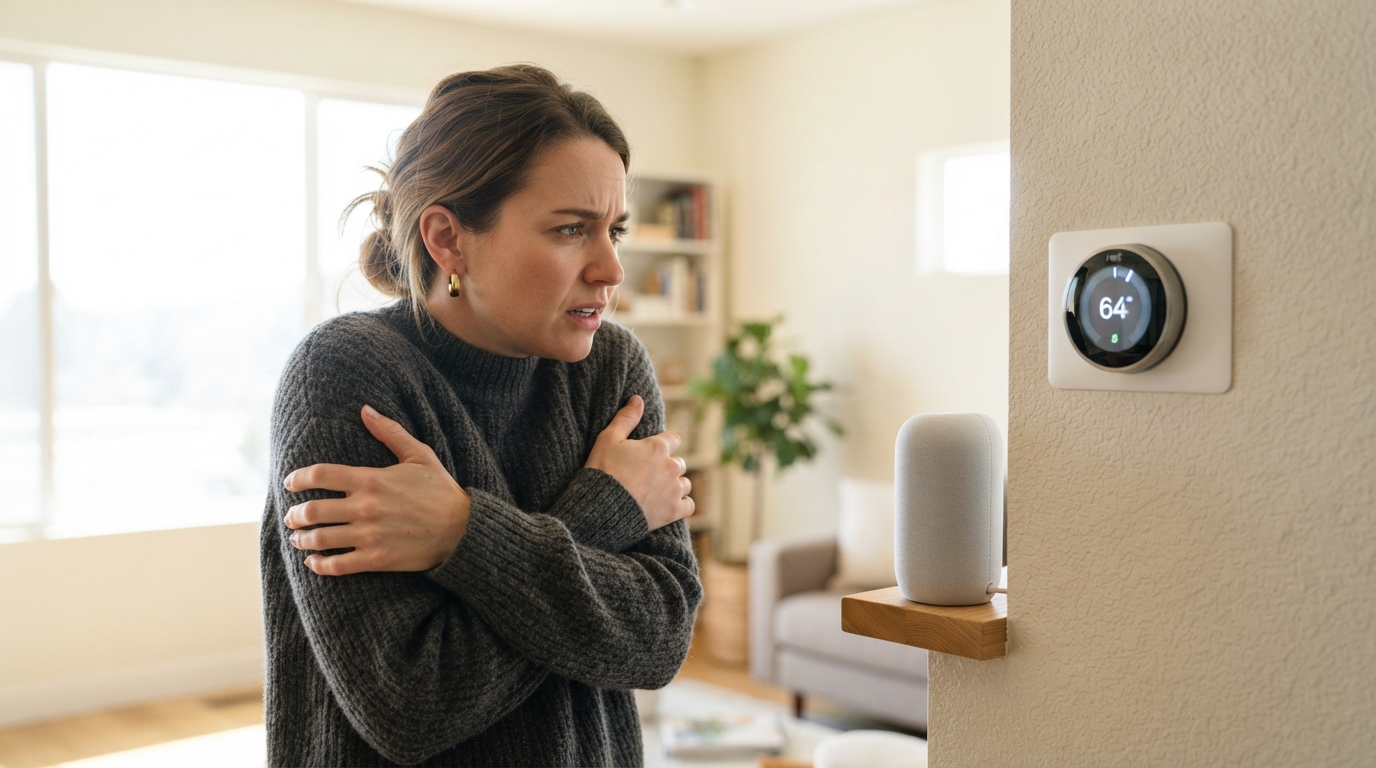
Have you ever found yourself shivering on a cold winter evening, only to plead with your voice-controlled thermostat, "Hey Google, I'm freezing?" You dream of a world where your home could intuitively respond to your needs, regulating its climate with the mere sound of your voice. But how effective are these voice-controlled thermostats, really? Are they the home climate saviors we envision, or do they fall short of their promised potential?
Why This Matters Now
As we continue to transition into smarter homes, the appeal of voice-controlled technology is undeniable. These gadgets offer convenience, energy efficiency, and a modern flair that many homeowners crave. However, with recent spikes in energy costs and intense climate conditions, understanding the efficacy of our home climate systems has never been more crucial. With so many options on the market, it's vital to know whether these thermostats can stand up to the task of keeping us warm.
Expert Perspectives
Perspective: Brian K. Kuhl, HVAC Technician
Brian K. Kuhl, an experienced HVAC technician, argues that while voice-controlled thermostats come with promising features, they are not without their challenges. "The convenience of controlling your thermostat with voice commands is appealing, but it can unintentionally lead to unpredictable energy usage. Many of these systems rely on algorithms that may not adapt well to your home's unique climate needs," he explains.
Kuhl warns that the learning capabilities of these devices are often based on broad data patterns rather than individual household behaviors. "For example, if you're someone who frequently alters the temperature due to various reasons—like opening a window or running a humidifier—the thermostat might not react as intelligently as you expect. Instead, you may end up increasing energy usage rather than decreasing it," he says.
Perspective: Lisa E. Pruitt, Energy Analyst
Lisa E. Pruitt takes a more optimistic view, suggesting that the key lies in choosing the right model. "Modern voice-controlled thermostats have come a long way in terms of efficiency and user interface. They offer significant benefits in energy savings, especially when integrated with other smart devices in your home. If correctly installed and calibrated, they can contribute to significant reductions in energy use," she notes.
Pruitt emphasizes the importance of smart learning algorithms. "These systems can analyze your routine—like when you wake up or leave for work—to optimize temperature settings during those times. But homeowners must fully engage with the technology. Regular adjustments and proper setup are critical in maximizing efficiency," she adds.
Perspective: Mark S. Turner, Building Scientist
Mark S. Turner, a building scientist who specializes in indoor climate conditions, casts a critical eye on the marketing of these devices. "There's a significant discrepancy between consumer expectations and the reality of what these thermostats can achieve. They are marketed as the solution to all climate problems, but they don't always account for the thermal dynamics of the house itself," he states.
Turner points out that many users think a voice command can solve their heating issues, overlooking important details such as insulation, window types, and even the layout of their home. "A smart thermostat alone won't fix under-insulated homes or homes with drafts. The issues often lie within the very structure of the house, and no amount of technology can override poor building performance," he explains.
Editorial Synthesis
Where Experts Agree
- Smart thermostats can provide convenience and potential energy savings when installed and used correctly.
- User engagement is necessary in making these thermostats truly effective.
- Voice prompts alone do not always dictate the efficiency of home climate management.
Where Experts Disagree
- The overall efficacy of these thermostats compared to traditional models varies with personal preference and specific home characteristics.
- The level of proactive engagement required from homeowners is debated, with Pruitt believing it can be minimized while Kuhl emphasizes active participation.
- Perceptions of future technology improvements differ, with Kuhl and Turner expressing skepticism while Pruitt sees great potential.
Why This Matters
Understanding the capabilities and limitations of voice-controlled thermostats is crucial for today's modern homeowner. With energy costs on the rise and climate control becoming a pressing issue, making informed decisions can lead to greater comfort and savings.
Before investing in a voice-controlled thermostat, consider your home's unique conditions and how you plan to interact with the technology. The ideal systems don't just react to your voice; they learn and adapt when homeowners actively engage with them and maintain the conditions of their space.
Ultimately, while voice-controlled thermostats may not be the ultimate solutions some marketing might suggest, they can complement a well-thought-out home climate strategy. So, the next time you find yourself freezing, remember that a successful home climate isn't just about technology—it's about understanding the blend of smart devices, home structure, and your lifestyle habits.
The Voices
 HVAC Technician
Brian K. Kuhl
Pro Smart Tech
HVAC Technician
Brian K. Kuhl
Pro Smart Tech
Smart thermostats offer convenience and energy-saving opportunities but can fall short in understanding individual household needs, leading to inefficiencies. Proper installation and user education are crucial for maximizing their performance.
 Energy Analyst
Lisa E. Pruitt
Balanced View
Energy Analyst
Lisa E. Pruitt
Balanced View
While voice-controlled thermostats can enhance user experience, their effectiveness can be contingent on the existing infrastructure and user habits. A thorough understanding of home energy dynamics is essential for optimizing their use.
 Building Scientist
Mark S. Turner
Cautious of Smart Tech
Building Scientist
Mark S. Turner
Cautious of Smart Tech
Voice-controlled thermostats often misinterpret commands and may not adjust settings effectively based on actual thermal dynamics. Homeowners should be cautious about relying solely on these devices for comfort and efficiency.
The Limitations of Smart Thermostats: A Reality Check
Voice-controlled thermostats promise convenience but often miss the mark on energy efficiency and adaptability.
References
- Smart Thermostats Energy.gov
- ENERGY STAR Smart Thermostats ENERGY STAR
- How Smart Thermostats Work Consumer Reports