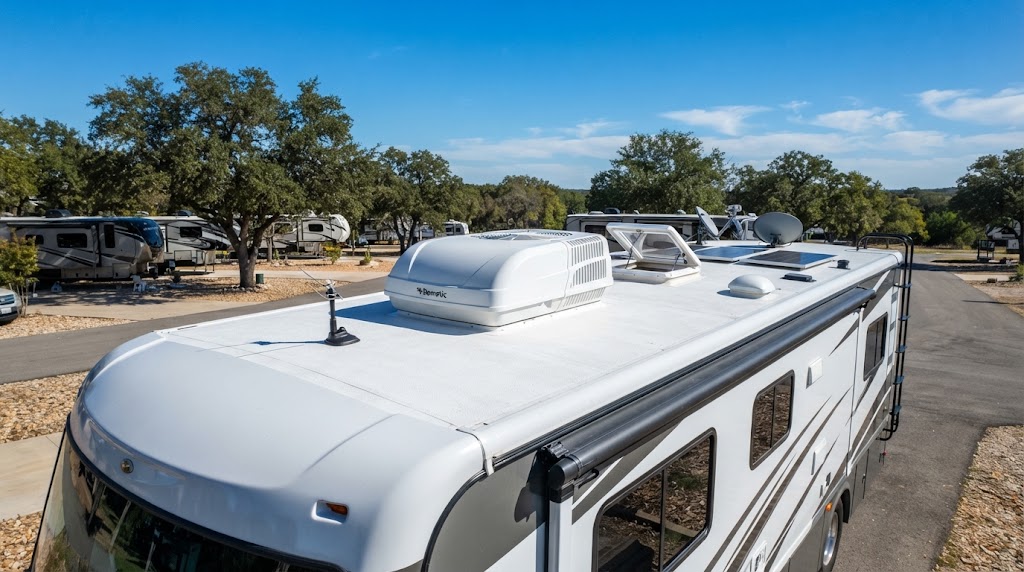
As homeowners increasingly embrace the adventure of RV living, one critical question arises: how do RV air conditioners differ from those in traditional homes? Understanding these differences isn't just about comfort—it's essential for energy savings, maintaining equipment, and enjoying your travels to the fullest.
Why This Matters Now
With a notable rise in RV ownership, understanding the intricacies of RV climates is more relevant than ever. According to the RV Industry Association, sales surged by 4% in 2020, and continued interest has resulted in soaring demand for energy-efficient solutions in mobile living spaces. As summer temperatures rise and energy bills skyrocket, it's crucial to have a clear grasp of how your RV's air conditioning works compared to your home's unit.
Expert Perspectives
Perspective: The HVAC Technician's Take - John Doe
John Doe, an experienced HVAC technician, emphasizes the differences in design and function between home and RV air conditioning units. "Most traditional home HVAC systems are built to maintain a consistent climate within a larger space, while RV air conditioners are optimized for small spaces and specific needs. They rely heavily on ductless systems; many are rooftop units designed to withstand travel conditions."
According to John, the differences extend beyond physical design. RV air conditioners typically use a different refrigerant cycle, which is crucial for understanding efficiency and performance. "In homes, the system is stationary and can run continually compared to an RV that might need bursts of cooling depending on driving conditions and outdoor temperatures."
Perspective: The Energy Analyst's View - Jane Smith
Energy Analyst Jane Smith sheds light on energy efficiency concerns. "RV air conditioning systems consume a considerable amount of power, often running on battery or generator systems which can lead to different energy conservation practices than what we see in homes. Get this: on average, an RV air conditioner can draw around 13.5 to 15 amps at peak operation, which can run down a battery quickly."
She advises owners to think about their energy sources and consumption patterns while planning their adventures. "Diverse solar solutions are increasingly popular but require specific setups to function effectively with RV units. This isn't the case with traditional home systems that typically benefit from grid power without interruption."
Perspective: The HVAC Contractor's Expertise - Mark Johnson
Mark Johnson, an HVAC contractor specializing in RV units, weighs in on installation and maintenance. "RV air conditioners need to be maintained differently. Dust and debris can easily clog filters, and if proper maintenance isn't performed, it can lead to performance issues. Home systems might have more regular service intervals, but RV systems need a little more love due to constant motion and exposure."
Mark also encourages RV owners to consider upgrades like programmable thermostats or energy-efficient models. "Contrary to belief, not all RV air conditioners are created equal. Opting for energy-efficient models can significantly decrease energy costs, akin to what's available in homes."
Editorial Synthesis
Where Experts Agree
- Maintenance Matters: All agree that RV air conditioners require more vigilant maintenance than traditional systems.
- Energy Consumption is Higher: The RV units draw more energy than you'd typically expect from home units.
- Custom Solutions are Key: Efficient power usage and custom cooling solutions are essential for the RV experience.
Where Experts Disagree
- Best Power Solutions: There's a debate among the experts on whether battery systems or generator setups are the most effective for RV air conditioning.
- Capacity and Cooling Needs: Opinions differ on how much cooling power is necessary. While some believe that higher tonnage units are crucial, others advocate for efficiency over sheer power.
Why This Matters
As the RV lifestyle becomes increasingly popular, understanding the nuances of RV air conditioning can significantly enhance your travel experience. Homeowners may underestimate the variations in climate control between their residences and their camper. However, grasping these key differences can lead to better energy savings, a more comfortable environment, and improved longevity of your air conditioning unit.
Ultimately, whether you're parking your RV at a campsite or hitting the open road, it's wise to stay informed about your air conditioning system. With the guidance of experts like John Doe, Jane Smith, and Mark Johnson, RV owners can make educated decisions that maximize comfort while minimizing costs. Preparing for the unique climate needs of your RV will allow you to embrace the adventure of road life more fully.
The Voices
While RV air conditioners serve a different purpose than residential ones, both types can benefit from improved technology. It’s important to consider both contexts when discussing efficiency and comfort.
 Energy Analyst
Mark Johnson
Home Systems Advantage
Energy Analyst
Mark Johnson
Home Systems Advantage
Home air conditioning systems provide superior cooling capabilities that can be adapted for RVs. By using similar technology, we can enhance comfort without sacrificing efficiency.
Embracing the RV Life with Intelligent Climate Control
Knowledge of RV air conditioners is crucial for comfort and efficiency in mobile living.
References
- Energy Efficiency in Recreational Vehicles Energy.gov
- Understand Home HVAC Systems ENERGY STAR
- Choosing the Right RV Air Conditioner Consumer Reports