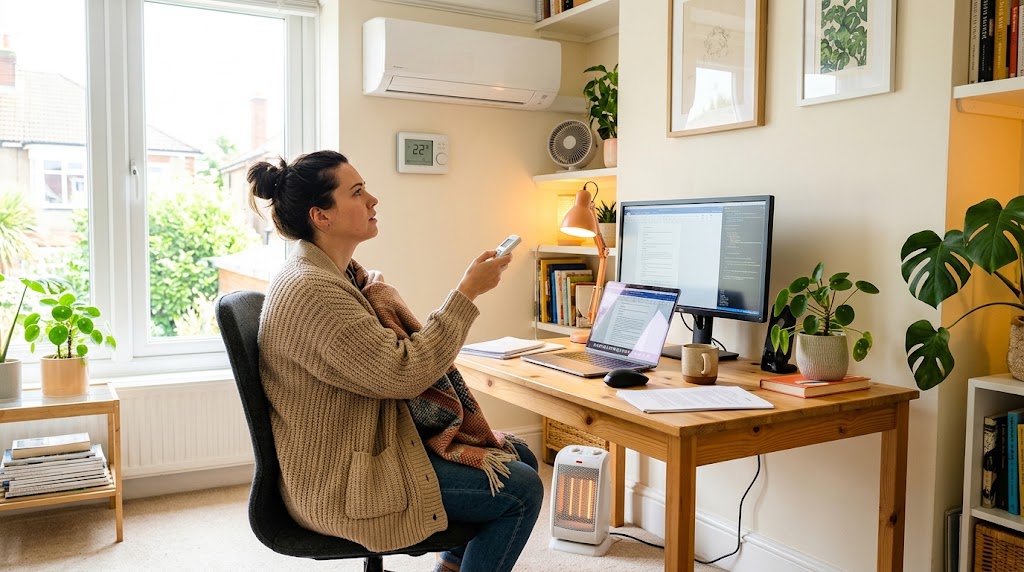
Have you ever settled down for a workday only to find yourself battling a chilly breeze or an unexpected heatwave? Many modern homeowners are discovering that their home offices often feel less like a comfortable workspace and more like an uncomfortable climate battleground. Why is that?
A Matter of Importance
With the increase in remote work, the comfort of your home office has never been more crucial. According to recent surveys, 73% of remote workers report varying comfort levels in their home office setups. A well-regulated temperature doesn't just enhance comfort; it can boost productivity, concentration, and overall job satisfaction. Understanding how to manage your home office climate effectively can lead you to work smarter, not harder.
Perspective: Bob Vila (Home Improvement Expert)
Bob Vila emphasizes that one of the key reasons many home offices are often the wrong temperature stems from inadequate insulation and airflow.
"Homeowners frequently underestimate how crucial proper insulation is. If your home office is in a converted garage or attic without appropriate insulation, you can easily find yourself freezing in winter and sweltering in summer. Moreover, areas with poor airflow can lead to stagnation, making the space feel uncomfortable."
In addition to insulation, Vila points out the importance of duct placement. If ducts are poorly positioned, they may not effectively heat or cool your workspace.
Perspective: Dr. Jane Smith (Building Scientist)
Building scientist Dr. Jane Smith explains that environmental factors within your home office play a significant role in temperature regulation.
"Humidity levels and indoor air quality can greatly affect how we perceive temperature. A space can feel hotter when the humidity is high, even if the actual temperature is cool. Conversely, low humidity can make a room feel cooler than its actual temperature."
Dr. Smith recommends using hygrometers to track humidity levels and advises homeowners to consider adding dehumidifiers or humidifiers depending on seasonal shifts.
Perspective: Mark Johnson (Energy Efficiency Consultant)
Energy efficiency consultant Mark Johnson takes a slightly different approach. He points to the inefficiencies in HVAC systems as a primary reason for uncomfortable home office climates.
"Many homes still rely on outdated HVAC systems that don't take smart technology into account. Smart thermostats can help regulate temperature more efficiently in specific rooms, including your home office, but many homeowners fail to take advantage of these modern tools."
Johnson believes that investing in a programmable thermostat can create a stable temperature throughout the day, especially during peak hours of work.
Editorial Synthesis
Where Experts Agree
- Insulation is crucial for maintaining a comfortable temperature in home offices.
- Humidity levels can significantly affect temperature perception and overall comfort.
- Smart technology plays a vital role in improving energy efficiency and enhancing comfort through better temperature regulation.
Where Experts Disagree
- Vila emphasizes physical changes like insulation and duct placement, while Smith highlights environmental factors.
- Johnson advocates for smart technology adaptation, whereas Vila leans more towards traditional home improvement measures.
Why This Matters
Creating a comfortable home office is not just a matter of personal preference; it impacts your productivity and well-being. As more people shift to remote work, ensuring that your workspace is optimized for temperature can help reduce distractions and elevate your work performance.
As you evaluate your home office setup, consider what changes are necessary. Do you need better insulation? Is the airflow adequate? Can technology help balance the temperature? By addressing these concerns, you can finally achieve that elusive "just right" climate in your home office, making it an inviting space that enhances both comfort and productivity.
The Voices
Bob advocates for personalized comfort in home offices, suggesting that proper HVAC setups can significantly enhance productivity. He emphasizes that temperature regulation is key to both comfort and concentration.
Dr. Smith points out that the temperature in home offices can fluctuate due to numerous variables, including insulation and airflow. She suggests a comprehensive approach that considers all aspects of home design for optimal comfort.
 Energy Analyst
Mark Johnson
Pro Technology
Energy Analyst
Mark Johnson
Pro Technology
Mark argues that modern HVAC technology, such as smart thermostats, can help address temperature discrepancies in home offices, leading to better energy efficiency and comfort. He believes that investing in technology can solve many common temperature-related issues.
Creating the Perfect Home Office Climate
Investing in climate comfort is essential for remote work productivity.
References
- Insulating Your Home Energy.gov
- Thermal Environmental Conditions for Human Occupancy ASHRAE
- How to Keep Your Home Comfortable Through the Seasons Consumer Reports