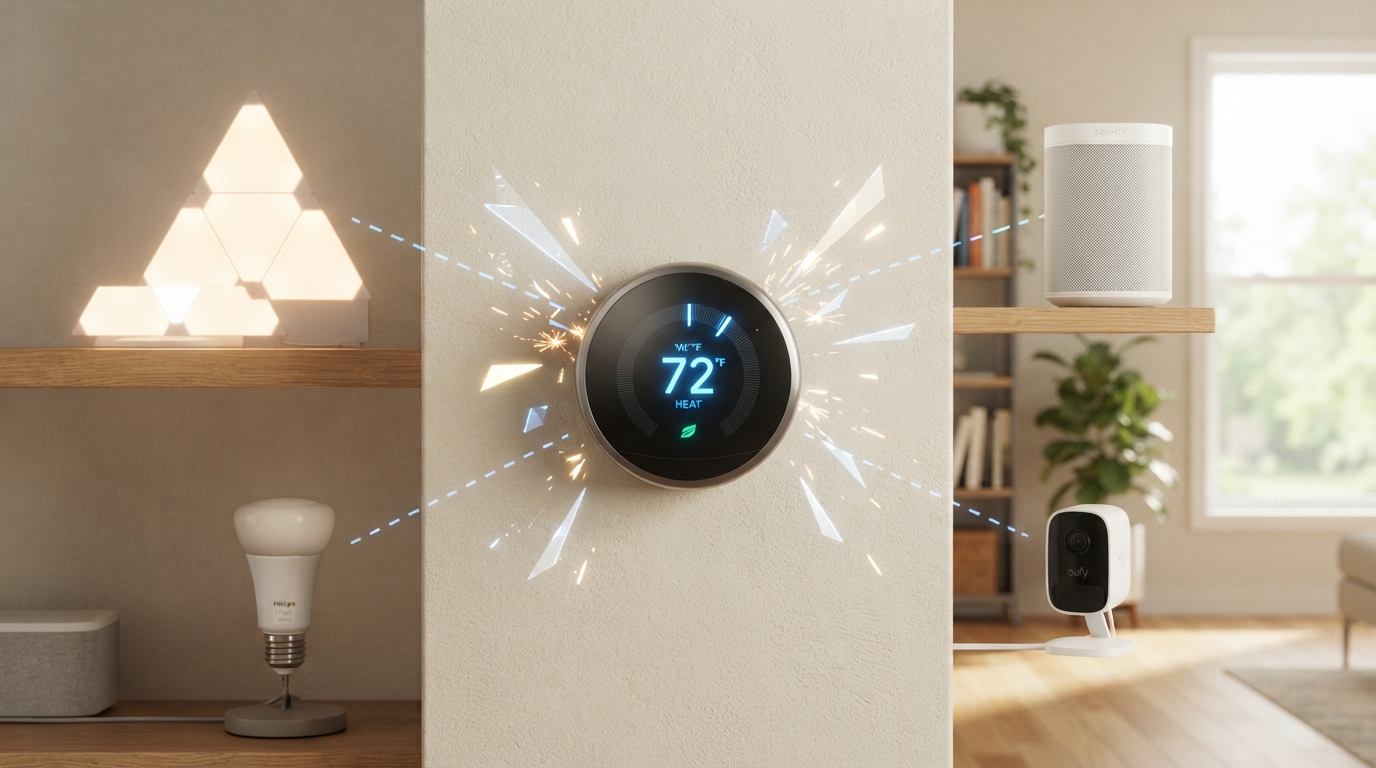
In the rapidly evolving world of smart home technologies, many homeowners are embracing intelligent solutions that promise energy efficiency and enhanced control—like smart thermostats. However, if you've recently upgraded your thermostat, you might be surprised to find it incompatible with your other HomeKit devices. This dilemma raises an important question: Why isn't your new thermostat communicating seamlessly with the rest of your smart home ecosystem?
Why This Matters Now
With energy costs rising and concerns about climate change becoming more pressing, the modern homeowner is increasingly focused on creating energy-efficient homes. Thermostats play a crucial role in this effort, allowing for better control over heating and cooling usage, which can significantly impact energy bills. However, as more devices flood the market, fragmentation becomes a problem. Different smart home protocols complicate integrations, meaning that not all devices communicate effortlessly with one another, leading to inefficiencies and missed savings.
To understand the intricacies of this issue, we reached out to experts in HVAC consulting, energy analysis, and building science for their insights.
Expert Perspectives
Perspective: Craig M. Duffy, CEO, HVAC Consulting
Craig Duffy sees the communication gap as a significant hurdle for homeowners aiming for a cohesive smart home experience. "The thermostats' functionality is often limited by the protocols they are designed to support. Matter is an exciting step forward, but as it's rolled out, not all existing devices are compatible with it right away. If your thermostat only uses proprietary protocols, it could leave you stranded in that regard."
Duffy emphasizes the importance of selecting devices that are forward-compatible with the latest frameworks like Matter, which is designed to improve communication between various smart home devices. "Choosing a thermostat that supports Matter ensures better integration in the long run, so homeowners can avoid these headaches."
Perspective: Sarah Kévin, Energy Analyst, Green Energy Associates
Sarah Kévin takes a broader view, focusing on the energy implications of device incompatibility. "It's frustrating to see homeowners invest in smart technology only to have it underperform due to communication barriers. Poorly integrated systems can lead to increased energy consumption because the devices are not coordinating their action."
Kévin reiterates the value of smart thermostats in achieving energy efficiency. "If we want to reduce our overall energy footprint, it's essential that these technologies work cohesively. Matter aims to fix this, but the transition period is critical. Some devices simply aren't ready to play in the Matter ecosystem yet, leaving consumers in the lurch."
Perspective: Tommy Nguyen, Building Scientist, EcoSmart Home Solutions
Tommy Nguyen views the situation with a focus on building science and energy management. "From a technical standpoint, not all components in a smart home are created equal. Some may use outdated protocols or standards, making integration impossible. While all manufacturers should be moving towards Matter compatibility, each has different timelines and products in their pipeline."
Nguyen advises homeowners to do their research before investing in smart devices. "The key is to check for Matter support or at least ensure that your devices communicate using compatible protocols. Otherwise, you may end up with a technology gap that results in wasted energy and resources."
Editorial Synthesis
Where Experts Agree
- Smart thermostats can significantly enhance energy efficiency when properly integrated with other home automation devices.
- The Matter protocol represents a significant advancement in enabling better communication among smart home devices.
- Homeowners should prioritize devices that are compatible with the latest technologies to future-proof their homes.
Where Experts Disagree
- The timeline for widespread adoption of Matter and other equivalent standards varies, with some experts believing it will happen quickly and others anticipating a longer transition.
- The degree of impact improper integration has on energy consumption is debated, with some experts seeing it as minimal and others viewing it as critical.
Why This Matters
As we continue to transition into a world where smart technology is the norm rather than the exception, understanding the capabilities and limitations of these devices is paramount. Homeowners stand to benefit tremendously from efficient, integrated systems that work together harmoniously. However, being aware of compatibility issues—especially in the context of protocols like Matter—will set the stage for smarter energy usage and improved home climate management. Investing in the right technologies today can lead to significant savings tomorrow, both in terms of energy costs and maintenance hassles.
Choosing wisely when upgrading your smart home ecosystem can pave the way to a seamlessly integrated, energy-efficient future—with one less worry about whether your thermostat will cooperate with your smart devices.
Embrace the change, do your research, and ensure your home is not just smart, but exceptionally adaptable.
The Voices
 CEO, HVAC Consulting
Craig M. Duffy
Pro Integration
Modern thermostats should seamlessly communicate with all smart devices, offering homeowners an integrated experience. Ensuring compatibility during installation can help prevent any communication issues that frustrate users.
 Energy Analyst, Green Energy Associates
Sarah Kévin
Balanced Perspective
While integration of new devices is essential for optimizing energy use, the challenge lies in ensuring these devices adhere to various standards. It's crucial to consider compatibility before installation to maximize efficiency and user satisfaction.
 Building Scientist, EcoSmart Home Solutions
Tommy Nguyen
Pro Standards
The key issue often lies in differing standards among manufacturers, which can hinder communication between devices. Standardization in smart home technology is necessary to ensure devices work harmoniously together, enhancing user experience.
Navigating the Smart Home Fragmentation
Investing in compatible smart devices is key to unlocking the full potential of a smart home.
References
- Smart Thermostats ENERGY STAR
- The Benefits of Smart Thermostats energy.gov
- Smart Thermostat Buying Guide Consumer Reports