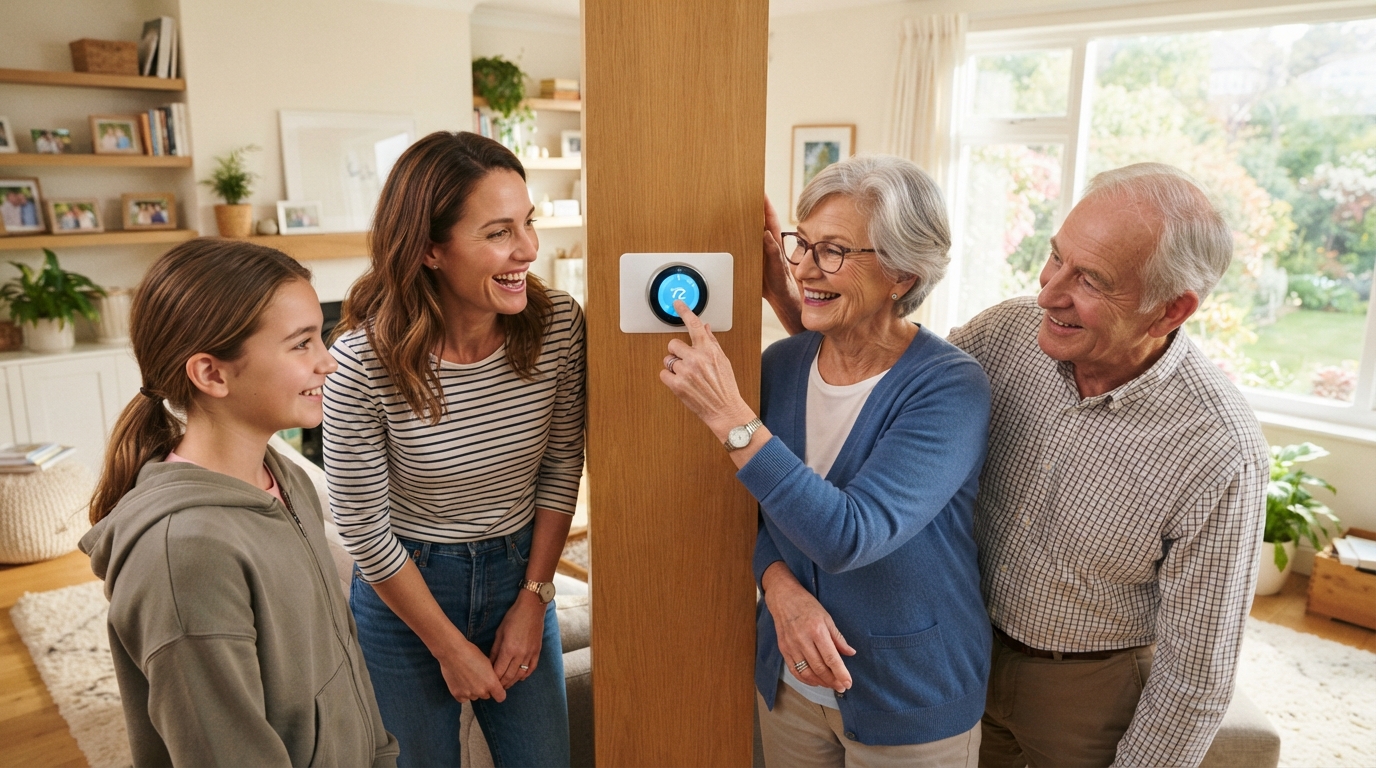
Is your home filled with the warmth of family, yet chilled by the tension of competing temperature preferences? As multigenerational living becomes more common, the simple act of setting a thermostat can often spark debate and division. How can homeowners foster harmony while ensuring everyone is comfortable?
Why This Matters Now
In recent years, multigenerational households have surged in popularity. According to the Pew Research Center, more than 60 million Americans live in a home with multiple generations under one roof. The practical benefits of shared expenses and caregiving are clear, but so too are the potential challenges—especially when it comes to home climate. As summer heat and winter chills hit, balancing differing comfort levels can turn into a battleground.
To help navigate this common issue, we consulted experts in HVAC systems, energy analysis, and building science. Their insights provide ways to ease the conflict around temperature settings without turning the home into a battlefield.
Expert Perspectives
Perspective: John W. McCaffrey (HVAC Technician and Educator)
John W. McCaffrey emphasizes the critical role that HVAC systems play in achieving a comfortable balance in multigenerational households. "A single thermostat may not be adequate for homes with different needs. Ideally, you'd want a zoned heating and cooling system that allows each area of the house to be controlled independently."
He recommends investment in technology such as smart thermostats, which can be programmed to adjust temperatures at different times. "A family member who likes it cooler at night can have their zone adjusted, while others can enjoy warmth during the day."
McCaffrey also highlights the importance of home insulation and air sealing. "If there are leaks or inadequate insulation, it's nearly impossible to maintain comfort consistently."
Perspective: Lisa H. Rodriguez (Energy Analyst)
Lisa H. Rodriguez focuses on the energy implications of varying temperature preferences among family members. "It's essential to consider both comfort and energy efficiency," she notes. "By maintaining a slight temperature compromise—say, setting the thermostat between what each generation prefers—families can save on energy bills while keeping peace in the household."
She also suggests utilizing energy-efficient appliances. "Investing in energy-efficient windows and doors can help maintain your preferred temperatures without overworking the HVAC system." Rodriguez points out that many families may not realize that even small changes can lead to significant savings in utility bills.
Perspective: Mark T. Johnson (Building Scientist)
Mark T. Johnson offers a broader perspective, noting that psychological comfort is as important as thermal comfort. "Homeowners need to consider the factors that contribute to a sense of comfort," he explains. "This includes not just temperature, but airflow, humidity, and even personal preferences that vary by age group."
He recommends strategies to optimize airflow. "Using fans can help even out the temperature throughout different rooms. Older family members may prefer warmer spaces, while younger members might appreciate a slight chill. Proper airflow can help meet those needs." Instead of strict temperature settings, Johnson advocates for a more holistic approach that takes into account the various factors influencing comfort.
Editorial Synthesis
Where Experts Agree
- Zoning is Valuable: All experts suggest that a zoned heating and cooling system can help address the different temperature needs of family members.
- Smart Technology Benefits: Investing in smart thermostats and energy-efficient appliances can lead to both comfort and cost savings.
- Insulation Matters: Proper insulation and air sealing are critical for maintaining a comfortable indoor climate and reducing energy consumption.
Where Experts Disagree
- Temperature Compromise Percentages: The ideal temperature range may vary significantly depending on preferences, with some experts advocating for a slightly cooler home while others suggest a warmer approach.
- Use of Fans: Johnson emphasizes the use of fans to enhance airflow as a key solution, while others focus on systems like zoning.
Why This Matters
Creating a comfortable environment in a multigenerational household is about more than just avoiding conflict—it promotes well-being and quality of life. As families come together, understanding each person's preferences and finding ways to accommodate them can lead to happier living. By investing in technology and making small adjustments to their homes, families can create a climate where everyone feels at home, both physically and emotionally.
As you navigate your own household dynamics, take into account these expert strategies. Reach out to HVAC professionals for personalized solutions, discuss preferences openly with family members, and remember that a comfortable home is a happy home. The path to peace is often paved with communication and understanding.
The Voices
 HVAC Technician and Educator
John W. McCaffrey
Pro Customization
HVAC Technician and Educator
John W. McCaffrey
Pro Customization
Every household is unique, and it's vital that we cater to the specific temperature needs of all family members. By installing zoned heating and cooling systems, we can ensure that comfort is achieved throughout the multigenerational home.
 Energy Analyst
Lisa H. Rodriguez
Balanced Approach
Energy Analyst
Lisa H. Rodriguez
Balanced Approach
Finding a balance between temperature preferences requires thoughtful planning and appropriate technology. I advocate for energy-efficient solutions that address both comfort and energy savings for families of all sizes.
 Building Scientist
Mark T. Johnson
Pro Central Control
Building Scientist
Mark T. Johnson
Pro Central Control
Rather than allowing each generation to have complete autonomy over their thermostat settings, it's more practical to encourage a unified system that offers steady temperatures and reduces energy waste. A controlled environment is key to sustainable living.
Finding Common Ground in Comfort
Smart adjustments can minimize thermostat conflicts in multigenerational homes.