Is it time to turn off your air conditioning in favor of a century-old cooling method?
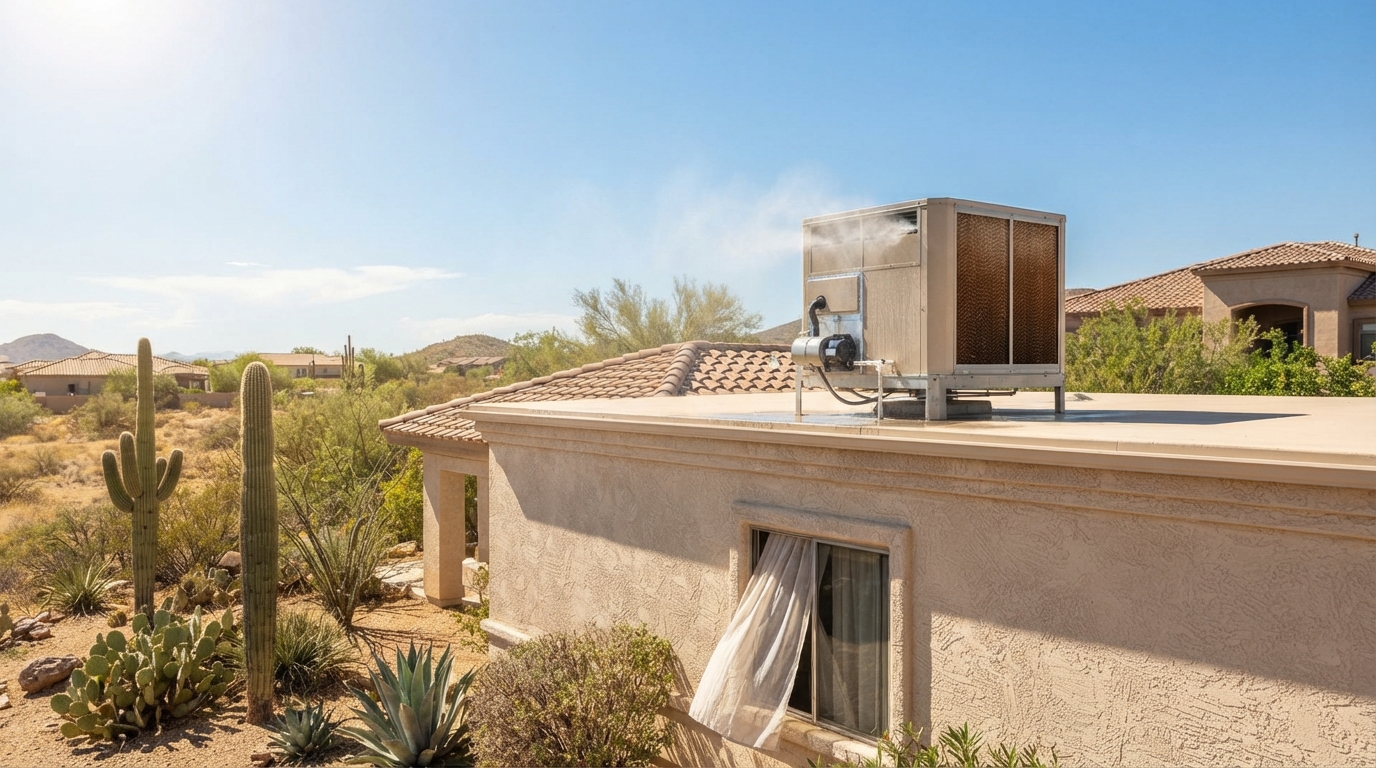
Across the arid regions of our country, homeowners are facing a growing disconnect with traditional air conditioning systems. As energy costs surge and environmental concerns mount, many are asking: Is it possible to stay cool during those hot summer months without the high energy bills or heavy carbon footprint that come with conventional AC? Enter the evaporative cooler—often affectionately known as the swamp cooler. This 100-year-old cooling technique is once again gaining popularity in dry climates, where it could offer a more efficient way to keep homes comfortable.
Why This Matters Now
The climate crisis is pushing homeowners to rethink their energy consumption. According to the U.S. Department of Energy, residential energy use accounts for about 20% of the nation's total energy consumption, with air conditioning being a significant contributor. As temperatures rise, the demand for AC systems escalates, which translates to higher energy costs and environmental impact. In this light, evaporative coolers are positioning themselves as a viable alternative, particularly for those living in arid regions.
Expert Viewpoints
Perspective: John J. Fick (HVAC Technician)
As an HVAC technician with over 15 years of experience, John J. Fick underscores the operational simplicity and cost benefits of evaporative coolers. "Evaporative coolers can significantly lower indoor temperatures by up to 20 degrees Fahrenheit, depending on humidity levels," he explains. "They use less energy than traditional AC units and are better for the environment as they emit no harsh refrigerants." He highlights that their maintenance requirements are straightforward, primarily involving regular cleaning and occasional pad replacement.
John also stresses that evaporative coolers excel in dry climates where the humidity levels are low, allowing the water to evaporate efficiently. "In places like the Southwest, where humidity often dips below 30%, these systems outperform AC units in effectiveness and energy efficiency," he adds.
Perspective: Dr. Emily Carter (Energy Analyst)
Dr. Emily Carter, an energy analyst with a focus on sustainable solutions, poses a critical view on evaporative coolers. While she acknowledges their benefits, she warns that they are not a one-size-fits-all solution. "The effectiveness of evaporative coolers is highly dependent on environmental factors. In areas with higher humidity, they can perform poorly, leading to discomfort rather than relief," she argues.
Moreover, Dr. Carter points out the upfront cost and the necessary installation requirements: "Homeowners must consider that while the long-term energy savings can be substantial, the initial investment can be a barrier." She encourages homeowners to evaluate their specific climate zone and compare the long-term advantages versus disadvantages alongside traditional AC systems.
Perspective: Mike Rodriguez (HVAC Contractor)
HVAC contractor Mike Rodriguez offers insights from a practical and installation standpoint. He emphasizes the growing trend toward renewable technology and the economic benefits for homeowners. "More people are turning to evaporative coolers because they are considerably cheaper to install and operate," he states. "The average initial cost can be half that of a standard AC system."
However, Mike also shares some real-life experiences. "I have seen homeowners who've switched to evaporative coolers love them, especially during the dry months. Still, during peak humidity seasons, they revert to their AC for comfort." He encourages a hybrid approach where homeowners can utilize both systems depending on the climate.
Editorial Synthesis
Where Experts Agree
- Evaporative coolers are energy-efficient and environmentally friendly alternatives to traditional AC systems.
- They work best in dry climates where humidity is low.
- Regular maintenance is essential for optimal performance.
Where Experts Disagree
- The effectiveness of evaporative coolers in humid versus dry climates is debated.
- Initial cost versus long-term savings is a point of contention—in some cases, upfront costs can deter homeowners.
- The necessity of both systems in regions with fluctuating humidity levels.
Why This Matters
In summary, the rising interest in evaporative coolers reveals a crucial turning point for homeowners battling increasingly hot summers while striving to conserve energy and reduce costs. While experts like John J. Fick and Mike Rodriguez laud the efficiency and cost-effectiveness of evaporative coolers, Dr. Emily Carter urges caution, highlighting the importance of understanding the unique needs of one's environment. What remains clear is that the conversation around home cooling solutions is evolving.
As homeowners seek to manage their climate control in a more sustainable manner, the choice between traditional air conditioning and evaporative cooling systems deserves careful consideration. As you weigh your options, take into account local climate conditions, your budget, and the specific cooling needs of your home. After all, the aim is not just to stay cool, but to do so in a way that is beneficial for both your wallet and the planet.
With awareness and thoughtful decision-making, you can make a choice that suits your home, lifestyle, and the environment at large.
The Voices
 HVAC Technician
John J. Fick
Pro Evaporative Cooling
HVAC Technician
John J. Fick
Pro Evaporative Cooling
Evaporative coolers are a sustainable and cost-effective solution for homeowners in dry climates. They consume significantly less energy compared to traditional AC units and provide a natural cooling effect that is more pleasant for many occupants.
While evaporative coolers can be effective in dry climates, homeowners should evaluate their specific needs and the characteristics of their homes before making a switch. Factors like humidity levels and insulation play a critical role in the efficacy of such systems.
While evaporative coolers have their benefits, they may not provide sufficient cooling during exceptionally hot days or in homes with poor ventilation. Traditional AC systems offer versatility and reliability, especially for families who prioritize consistent indoor climate control.
Reconsidering Cooling Solutions in Dry Climates
Evaporative coolers present an appealing choice for cost-effective and eco-friendly cooling.
References
- Evaporative Cooling U.S. Department of Energy
- Evaporative Coolers Energy Star
- Fundamentals of Evaporative Cooling ASHRAE