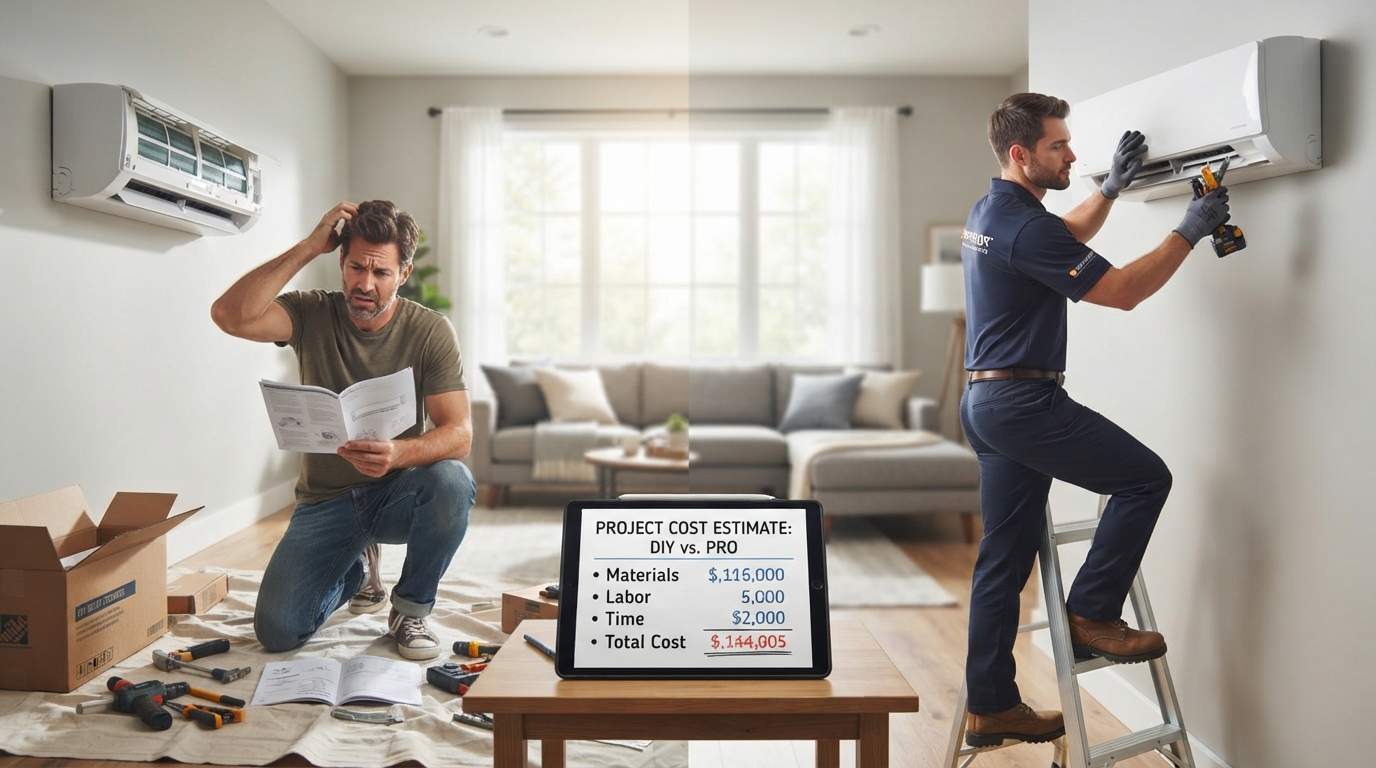
Introduction
As homeowners, we often grapple with choices that involve time, cost, and expertise, especially when it comes to enhancing our home climate. One pressing question many are asking this season is: is it worth it to install a mini-split system yourself, or should you hire a professional? With rising energy costs and a growing emphasis on efficient home heating and cooling, this debate is more relevant than ever.
Context
Mini-split systems are becoming increasingly popular for their efficiency in heating and cooling spaces without invasive ductwork. They're compact, versatile, and optimized for modern home needs. As energy prices soar, many homeowners are looking for ways to save, prompting a surge in DIY installations. However, as our investigation reveals, the expected savings from going the DIY route may not be as substantial as anticipated. It's crucial to explore both sides of this debate comprehensively.
Perspective: DIY Installation — Tom McGough
Tom McGough, an experienced HVAC technician, believes that skilled homeowners can indeed handle mini-split installations. "With the right tools and a bit of research, you can cut costs significantly. It's about taking the time to educate yourself and being meticulous in your work. Many are surprised to find that online resources and instructional videos can be very helpful," he explains.
However, McGough adds that while it can be cost-effective, the time investment and complexity shouldn't be underestimated. "There are nuances in installation — specifically regarding refrigerant lines and electrical work — that can pose safety hazards if not done correctly. Plus, local codes and regulations can affect your installation experience." He cautions potential DIY-ers to weigh the convenience and peace of mind that comes with professional help against the perceived savings.
Perspective: Professional Installation — James Pham
On the other side of the debate, James Pham, an HVAC contractor, strongly advocates for hiring professionals. "It's not just about the install; it's about performance. Professionals have the training and experience to ensure units work efficiently," he states. "An improperly installed mini-split can lead to significant energy waste, negating any initial savings from doing it yourself."
Additionally, Pham points out that frequent issues arise due to lack of knowledge about local climate factors and system compatibility. "We understand the nuances that can save homeowners headaches in the long run. It can save you money and discomfort by investing upfront," he explains, revealing that homeowners often forget that a poor installation can lead to increased maintenance costs over time.
Perspective: Energy Efficiency & Cost Over Time — Sarah Anderson
Sarah Anderson, an energy analyst, provides a broader view, echoing a sentiment that straddles both perspectives. "The economics of mini-split installations aren't just about upfront costs; they're about long-term savings and energy efficiency. A professional can guide homeowners toward the right units for their needs and ensure they operate at peak efficiency," she says.
Anderson highlights that improper installations can lead to higher energy bills over time, effectively erasing any upfront savings from DIY efforts. "Ultimately, the investment in professional installation often pays for itself in energy savings and avoidance of repairs," she adds, noting that many DIY installations hinge on incorrect sizing, leading to inefficiency.
Editorial Synthesis
Where Experts Agree
- Both DIY and professional installations have their merits.
- Proper installation is key to system efficiency and longevity.
- Local codes and regulations must be adhered to for both approaches.
Where Experts Disagree
- The extent of cost savings from DIY installations.
- The ability of average homeowners to successfully complete installations without professional help.
- The frequency of problems arising from DIY installations versus professional installs.
Conclusion
As renewable energy solutions grow in popularity and concern over energy efficiency rises, understanding the implications of DIY versus professional installation is key. While the allure of saving money on initial expenses may seem tempting, the long-term benefits of professional installation cannot be overlooked.
Why This Matters
Choosing the right method for mini-split installation can significantly affect home comfort and energy costs over time. Homeowners must weigh the DIY route against the advantages of professional expertise, keeping in mind that effective climate control is paramount for comfort and sustainability. As you consider this decision, ask yourself: is saving a bit of money upfront worth the potential costs of poor installation in the long run?
Making an informed choice will pay dividends in comfort and efficiency. Now that we've explored both perspectives in-depth, what approach will you take for your home climate needs?
The Voices
 HVAC Technician
Tom McGough
Pro DIY
Tom believes that with the right tools and knowledge, DIY installation can save homeowners a significant amount of money. He emphasizes that many mini-split systems come with straightforward instructions allowing adept individuals to handle the installation process.
 Energy Analyst
Sarah Anderson
Balanced View
Sarah argues that while DIY installation can cut costs, it may lead to inefficiencies if not done correctly. She recommends weighing the long-term savings against the potential risks involved in self-installation.
 HVAC Contractor
James Pham
Pro Professional
James advocates for professional installation, as it ensures compliance with regulations and system longevity. He warns that improper DIY installations can lead to costly repairs and inefficiencies that negate initial savings.
Weighing Savings Against Safety: The Mini-Split Dilemma
Opting for professional installation often provides more peace of mind and reliability than DIY efforts.
References
- Ductless Mini-Split Heat Pumps Energy.gov
- ENERGY STAR Certified Ductless Mini-Split Air Conditioners ENERGY STAR
- How to Choose a Ductless Mini-Split Air Conditioner Consumer Reports