Have you ever walked into your home and felt like you were about to board a jet? If your HVAC system sounds like it's gearing up for takeoff, you're not alone. Many homeowners grapple with the bewildering noises emanating from their heating and cooling units. But why is this happening, and more importantly, what can you do about it?
Why This Matters Now
As we move further into an era marked by extreme weather conditions, maintaining a comfortable indoor climate is critical. HVAC systems are essential not just for comfort but also for health. A malfunctioning or excessively noisy system can lead to missed repairs and decreased efficiency, costing homeowners more in energy bills and repairs.
Understanding why your HVAC is sounding like a jet engine can save you time, money, and stress.
Perspective: Richard Trethewey (HVAC Contractor, This Old House)
Richard emphasizes that loud sounds can often be traced back to mechanical issues. "The culprit could be anything from a dirty filter to inadequate insulation in ductwork," he explains. Here are some potential causes he identifies:
- Dirty Filters: "A clogged filter forces the system to work harder, leading to louder operation."
- Improperly Installed Ductwork: "If your ducts are not well-sealed, air can leak out, causing strange noises."
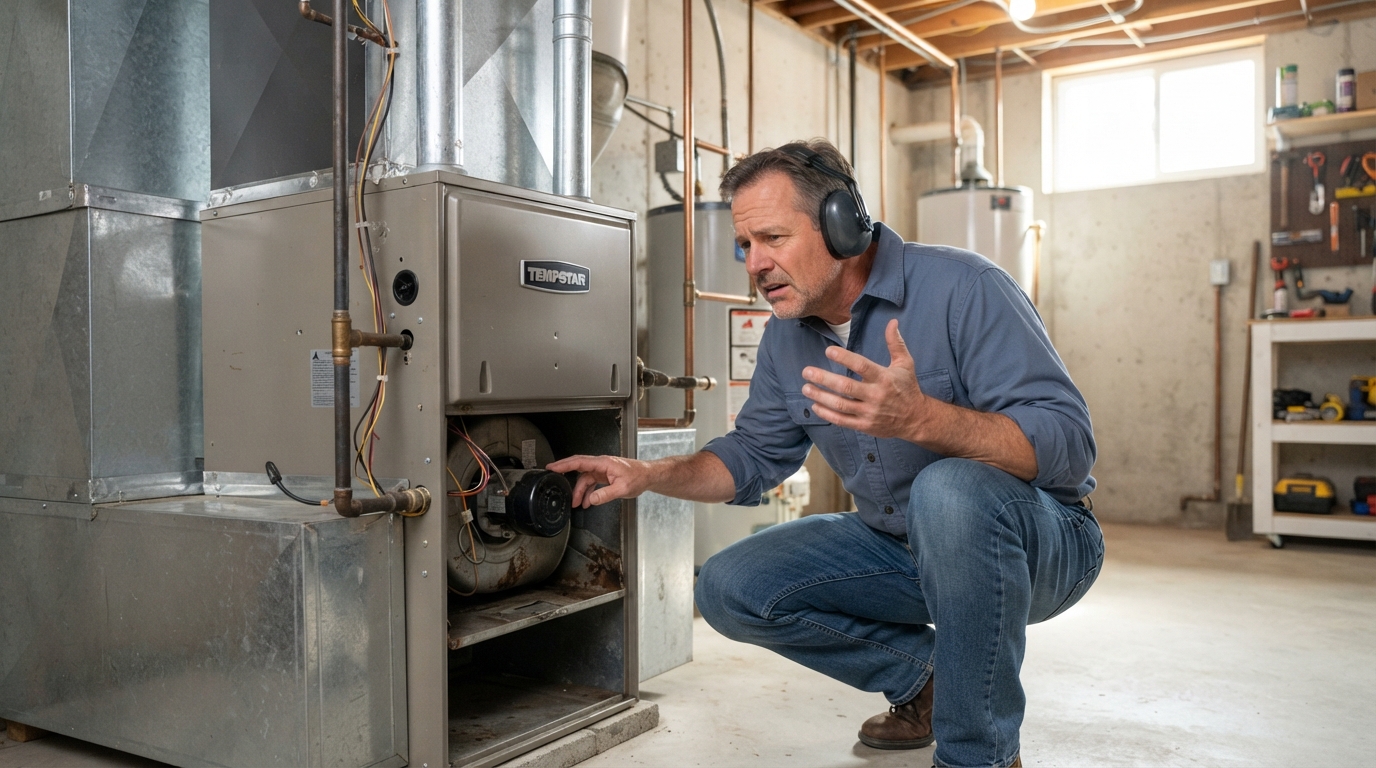
- Worn Bearings: "When bearings in the fan or motor wear out, the result is an alarming racket."
Richard suggests regular maintenance can mitigate these problems. "Annual inspections help identify troubling sounds before they escalate into costly repairs."
Perspective: Dr. David W. Anderson (Energy Analyst, Energy Solutions)
Dr. Anderson provides a broader perspective on the implications of HVAC noise. He points out that economic factors play a significant role here. "A noisy HVAC system often indicates inefficiency—and inefficiency directly translates to higher energy costs."
He highlights key points:
- Energy Efficiency: "A system making excessive noise often consumes more energy to maintain our desired temperature. You might save on repairs but lose on bills."
- Modernization Needs: "Older systems are more prone to these issues. If your unit is over 10 years old, it may be time to consider an upgrade, which can save you money long-term."
- Health Risks: "An ineffective system can also contribute to poor air quality, elevating health risks."
Dr. Anderson encourages homeowners to think long-term. "The upfront costs of upgrading may seem daunting, but in reality, it's an investment in both comfort and savings."
Perspective: Jessica H. Klein (Home Inspector, Klein Home Inspections)
Jessica takes a holistic approach as a home inspector. She notes that even minor noises can indicate larger issues. "Sometimes, what you hear is just the tip of the iceberg."
She elaborates on potential problems:
- Duct Obstructions: "If your ducts are blocked, it can create pressure, leading to rattling sounds."
- Mechanical Failures: "A failing compressor or blower can lead to alarming noises and signify impending breakdown."
- Environmental Factors: "Sometimes factors outside your system—like humidity levels—can contribute to noise."
Jessica stresses preventive care: "Regular inspections can detect issues early, so you're not faced with an expensive repair when your system finally breaks down."
Editorial Synthesis
Where Experts Agree
- Preventive maintenance is essential and can identify noise-related issues early.
- Poor installation or design of ductwork contributes to noisy HVAC systems.
- Older systems frequently experience more problems, including noise.
Where Experts Disagree
- Richard believes dirty filters are often the top cause of noises, while Dr. Anderson emphasizes energy inefficiencies as the primary problem.
- Jessica argues that environmental factors are often overlooked, whereas Richard focuses on mechanical issues.
Why This Matters
A functional and quiet HVAC system is vital for every modern homeowner, especially as we face varying climate challenges. Addressing noise issues can save you money on energy bills, protect the integrity of your system, and ensure a safe living environment.
As the experts have shared, many of the problems leading to loud HVAC systems are fixable. Regular maintenance, timely inspections, and proactive decision-making can alleviate the jet-like sounds and lead you to enjoy a peaceful home environment. Don't wait until the noise becomes unbearable; discover the solutions that work for you today.
Taking care of your HVAC system not only improves your home but also enhances your quality of life, offering peace of mind in an increasingly noisy world.
The Voices
 HVAC Contractor, This Old House
Richard Trethewey
Pro System Upgrades
HVAC Contractor, This Old House
Richard Trethewey
Pro System Upgrades
Many homeowners overlook the importance of regular system maintenance and upgrades. Addressing wear and tear can significantly reduce noise levels and improve efficiency.
 Energy Analyst, Energy Solutions
Dr. David W. Anderson
Pro Noise Management
Energy Analyst, Energy Solutions
Dr. David W. Anderson
Pro Noise Management
Excessive noise from HVAC systems often signals inefficiencies and potential issues. Homeowners should assess their systems and consider solutions like sound insulation or more efficient models to alleviate these problems.
While some noise is expected, persistent loud sounds may indicate system issues that warrant further investigation. A thorough inspection can help identify underlying causes and potential remedies.
Understanding HVAC Noises: A Path to Improvement
Most HVAC noise issues are fixable with timely maintenance and care.
References
- Furnace and Boiler Fuels Energy.gov
- HVAC Systems: FAQs Energy Star
- Duct Design Guide ASHRAE