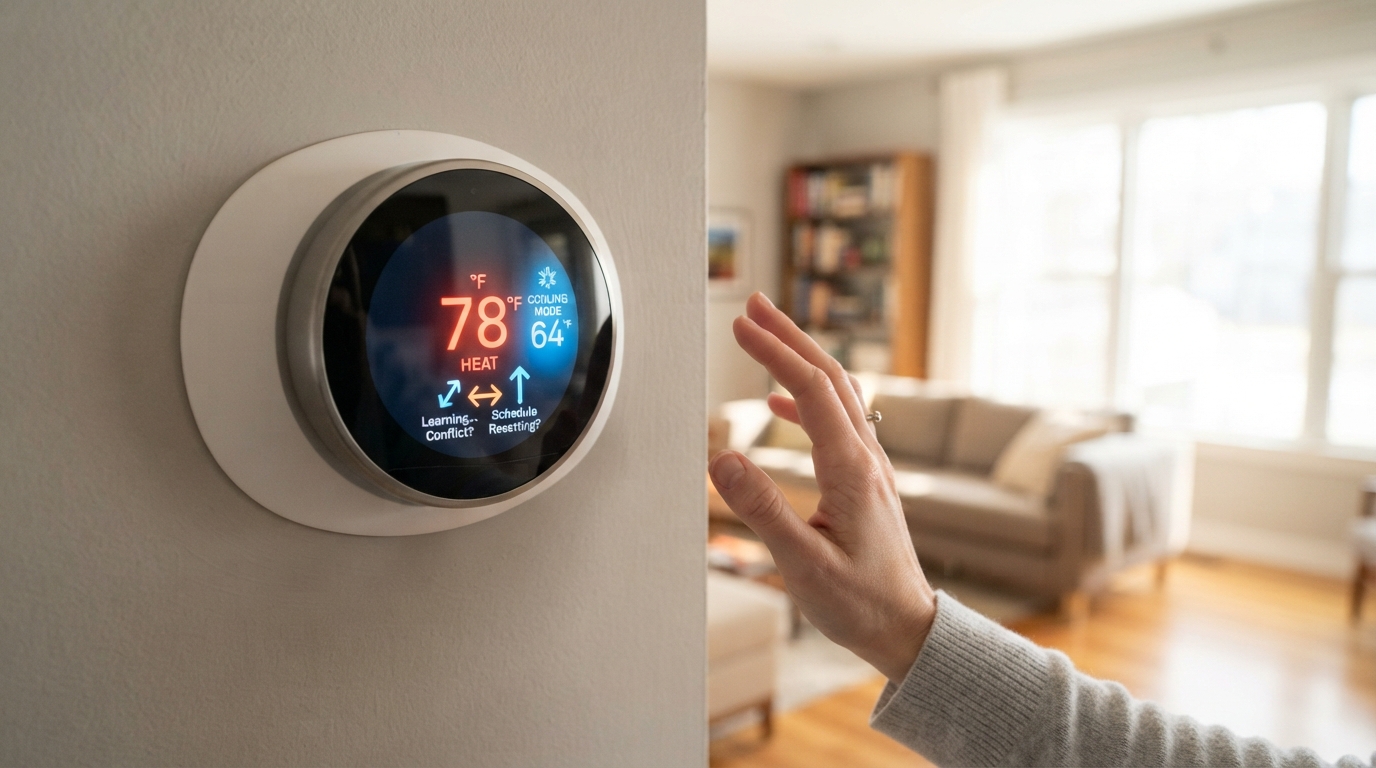
Smart thermostats have made controlling our home climate easier and more efficient. However, there's a growing concern that the "learning mode" of these devices may not be as beneficial as once thought. Are we inadvertently teaching them poor habits that could affect our energy usage and comfort?
Context: Why This Matters Now
With energy costs on the rise and homeowners becoming increasingly conscious of their environmental impact, optimizing heating and cooling systems is more crucial than ever. Smart thermostats promise individualized comfort and efficiency, but if their learning algorithms pick up on inconsistent patterns, the result might be the opposite. In a world where every degree matters, understanding the functionalities of these devices can lead to better decisions.
Expert Perspectives
Perspective: Michael Blasnik, Energy Analyst
Michael Blasnik emphasizes that while smart thermostats aim to enhance energy efficiency, their learning mode is not foolproof. "These devices learn from users' habits, but if those habits are inconsistent or erratic, the thermostat will optimize around those behaviors, not necessarily the most efficient settings," he warns.
Furthermore, Blasnik suggests that many users tend to adjust their thermostats frequently, influenced by fluctuations in outside temperature or simply forgetting to engage energy-saving features. "If you find yourself manually changing settings repeatedly, your thermostat might just be learning how to respond to inconsistency," he adds.
Perspective: Kathy Pruitt, Building Scientist
Kathy Pruitt brings a building science perspective, advocating for a thorough understanding of one's home before leveraging smart technology. "Smart thermostats analyze data from your everyday patterns, but those patterns need to be synced with the thermal characteristics of your home," she explains.
Pruitt advises homeowners to ensure their insulation and air sealing are sound before relying heavily on smart thermostats. "If the home isn't well-built, even the best algorithm won't optimize energy use effectively. The thermostat might learn to run the HVAC system more than necessary just to keep up with temperature fluctuations caused by drafts or poor insulation."
Perspective: Chris LaFleur, HVAC Contractor
As an HVAC contractor, Chris LaFleur has seen numerous households struggling with their smart thermostats. "Many clients believe these devices will take care of everything," he states, "but without proper installation and maintenance of HVAC systems, smart learning can easily lead to errors."
LaFleur advises a hands-on approach: "Homeowners should periodically review the learning behavior and make manual adjustments as necessary. It's also critical to remember that 'learning mode' won't cater to irregular schedules or sudden lifestyle changes effectively."
Editorial Synthesis
Where Experts Agree
- Inconsistency is problematic: All three experts concur that erratic temperature adjustments can lead to ineffective learning patterns.
- Home structure matters: The thermal properties of the home dramatically influence how well a smart thermostat can perform.
- Manual oversight is beneficial: There's a consensus that homeowners should periodically evaluate their thermostats' settings instead of relying solely on learning modes.
Where Experts Disagree
- Value of learning mode: While Blasnik highlights potential pitfalls, Pruitt believes the feature can be useful if homeowners have stable habits.
- Dependency on smart technology: LaFleur is more skeptical of full dependence on technology in HVAC systems, while Blasnik and Pruitt suggest it can complement good practices.
Why This Matters
Navigating the complexities of smart technology in your home can feel overwhelming. Many homeowners are keen to embrace innovations but may not realize that these advancements require an informed approach. Smart thermostats can lead to reductions in energy use and create a comfortable living environment, but only if they learn the right habits. Ensuring stability in temperature management and aligning your home's construction with smart technology can help in achieving optimal results. Rather than letting convenience dictate energy efficiency, an active engagement in how these devices function can promise better outcomes for both your wallet and the planet.
Like any technology, smart thermostats are tools, and tools work best when used properly. Don't let your thermostat learn the wrong habits; empower yourself with the knowledge to guide its learning.
The Voices
 Energy Analyst
Michael Blasnik
Smart Learning
Energy Analyst
Michael Blasnik
Smart Learning
Smart thermostats are often designed to learn user habits, but they can misinterpret temperature preferences, leading to inefficient usage. By providing better training parameters, these devices can optimize energy savings without compromising comfort.
 Building Scientist
Kathy Pruitt
Balanced Approach
Building Scientist
Kathy Pruitt
Balanced Approach
While smart thermostats can improve energy efficiency, their learning capabilities can lead to unintended consequences. Homeowners should be aware of their thermostat's settings and engage with the technology to ensure it fits their lifestyle.
Rethinking Smart Thermostat Learning Modes
Smart thermostats require user consistency to be truly effective.
References
- Smart Thermostats: Save Money and Energy at Home Energy.gov
- Smart Thermostats ENERGY STAR
- Do Smart Thermostats Really Save Money? Consumer Reports