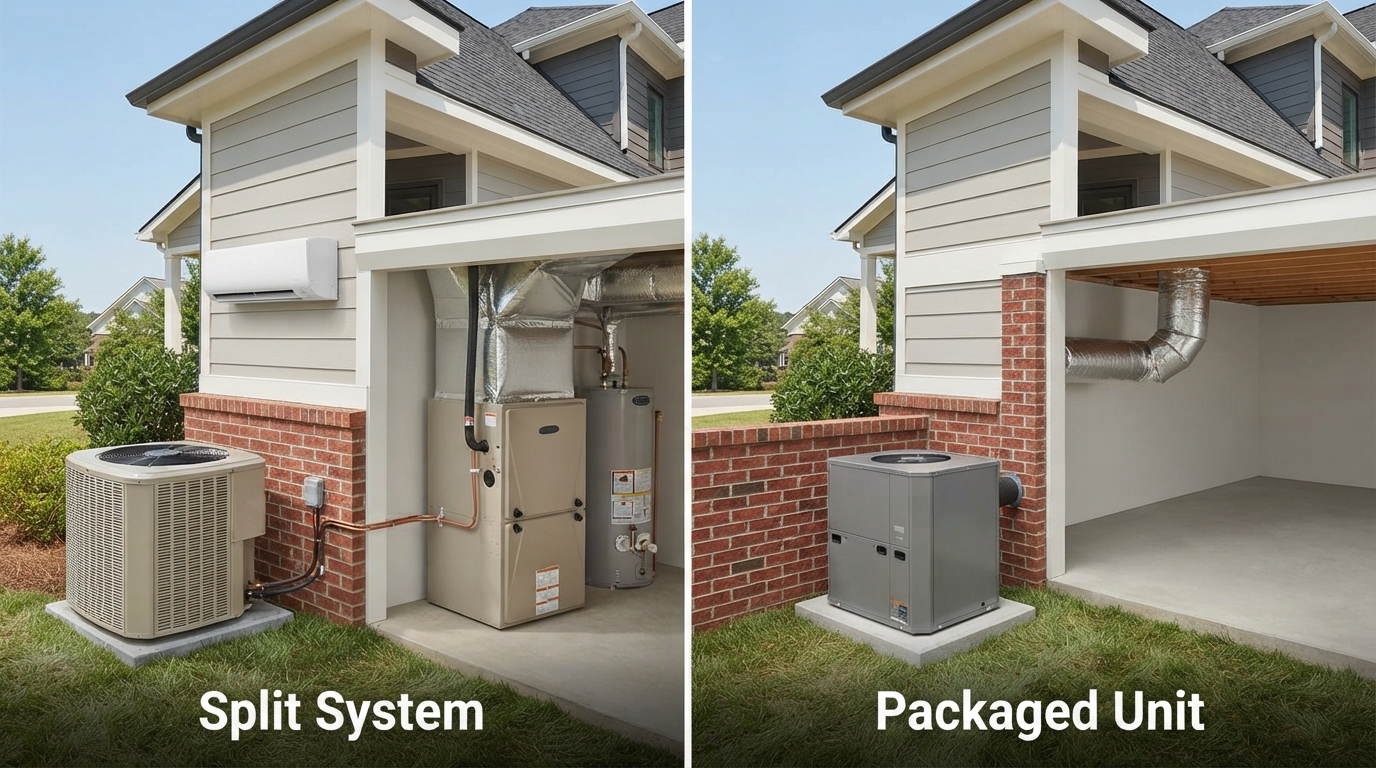
Have you found yourself stuck between deciding on a packaged unit or a split system for your home's heating and cooling? With the number of options available today, it can feel overwhelming. This article delves into the nuanced differences between these two systems, and why understanding them matters now more than ever.
Why This Matters Now
As climate concerns grow and energy efficiency becomes increasingly vital, selecting the right HVAC system is crucial for homeowners. Recent statistics show that HVAC systems account for about 50% of residential energy consumption, making the choice of heating and cooling systems—to optimize efficiency and saving—significant. Furthermore, with many areas facing changes in climate, having a reliable and effective HVAC system is not just a luxury; it's essential for maintaining a comfortable indoor environment.
Expert Viewpoints
Perspective: Brian McMurray (HVAC Technician, Energy Efficiency Expert)
"Packaged units are great for small spaces or homes without a lot of room for ductwork. They consolidate heating and cooling into one compact unit, which can be a game-changer for homeowners. Plus, they often have higher efficiency ratings which can lower bills in the long run," says Brian McMurray.
According to Brian, "The simplicity of packaged units allows for easy installation and maintenance, which can translate to cost savings over time. Homeowners should know that with proper attention, a packaged unit can also deliver the same level of comfort as a split system."
Perspective: Linda Garcia (Building Scientist and Home Inspector)
"While I see the appeal of packaged units, they aren't without downsides. Depending on the installation, they can struggle with airflow issues, especially in larger homes. Relying on one unit can lead to comfort discrepancies; some rooms may not get as much airflow, leaving hot or cold spots," says Linda Garcia.
Linda highlights that while packaged units save space, homeowners should consider the design of their home. "In many cases, a multi-split system can provide better zoning control, ensuring each area of the home receives the right level of heating or cooling."
Perspective: Mark Thompson (HVAC Contractor)
"Split systems are becoming increasingly popular because they give homeowners flexibility. You can install multiple indoor units connected to one outdoor compressor, which means you can customize the setup based on the home's layout. This can enhance comfort significantly," says Mark Thompson.
Mark believes that while packaged units can work in smaller homes or apartments, larger homes often benefit from split systems. "A split system allows for easier repairs and repairs that don't disrupt the entire home system. This can be a lifesaver in larger installations where one failure can hinder the entire unit."
Editorial Synthesis
Where Experts Agree
- Both packaged units and split systems can effectively heat and cool a home.
- Energy efficiency is crucial in both systems, affecting long-term utility costs.
- Homeowners must evaluate their individual home layout before making a decision.
Where Experts Disagree
- The effectiveness of airflow and comfort across different rooms varies significantly between the two systems.
- The pros and cons of installation difficulty and maintenance costs.
- Overall homeowner preference: compactness versus optimized energy distribution.
Why This Matters
In the modern homeowner's journey, understanding the HVAC landscape is not just about choosing an option; it's about choosing what fits your life best. While both packaged and split systems have their unique advantages, knowing the facts enables better decision-making. As energy conservation continues to rise in importance, making a choice that aligns with both your energy goals and comfort levels has never been more pressing.
Choosing the right system is not simply about choosing between packaged or split systems; it's about maximizing your home's efficiency and comfort. As our experts have illustrated, evaluating your space, desired outcomes, and efficiency needs will empower you in this decision-making process. Whether you're tight on space or seeking the best airflow, understanding each perspective allows you to make a fully informed choice tailored to your home.
The Voices
 HVAC Technician, Energy Efficiency Expert
Brian McMurray
Support for Split Systems
HVAC Technician, Energy Efficiency Expert
Brian McMurray
Support for Split Systems
Split systems allow for more precise temperature control in different areas of the home while maintaining efficiency. They also offer flexibility in installation, making them a great space-saving option that homeowners often overlook.
Both packaged units and split systems have merits, and the choice should be based on the specific needs of the home and its occupants. A thorough assessment can help homeowners make the best decision for their spatial and energy efficiency requirements.
 Building Scientist, Home Inspection Services
Mark Thompson
Advocate for Packaged Units
Building Scientist, Home Inspection Services
Mark Thompson
Advocate for Packaged Units
Packaged units are often more cost-effective and easier to install in smaller spaces, making them an excellent solution for many homeowners. They require less maintenance and can be more convenient for those looking for a simple, all-in-one system.
Navigating HVAC Choices: Packaged vs. Split Systems
The decision between packaged units and split systems should be made based on individual needs and home layout.
References
- Heating and Cooling Energy.gov
- Energy Efficient Heating and Cooling ENERGY STAR
- Designing HVAC Systems for Energy Efficiency ASHRAE