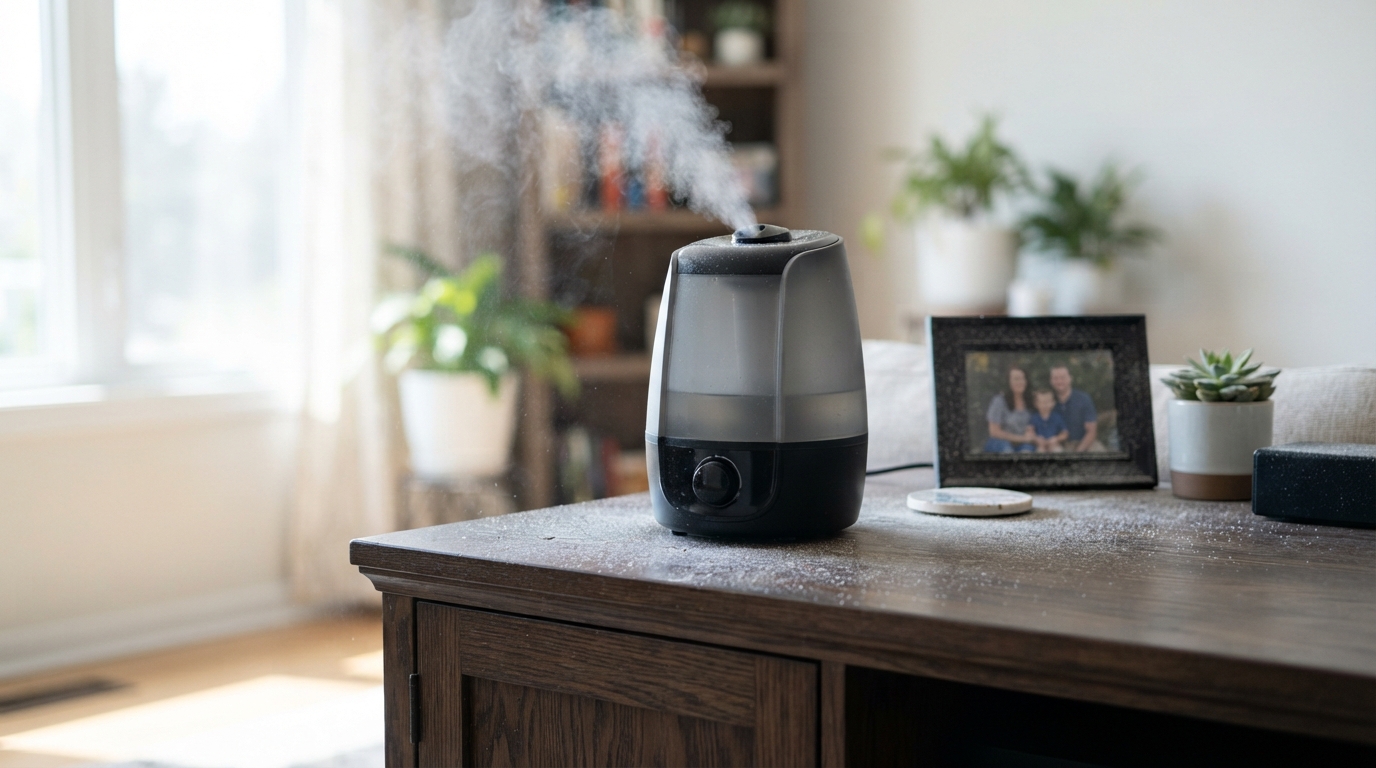
If you've noticed a fine white dust settling on your furniture, it may not just be negligence in cleaning. This mysterious residue is often connected to the use of humidifiers, particularly in homes with hard water. But what exactly is going on, and how important is it to address this issue?
The Importance of Addressing Humidifier Dust
As the climate fluctuates, many homeowners are leaning on humidifiers to maintain a comfortable indoor environment. According to the EPA, maintaining indoor humidity levels between 30% and 50% can reduce the likelihood of respiratory issues and improve overall comfort. However, for homeowners using humidifiers, the potential for mineral dust creates complications during this critical period for home health.
Understanding the connection between humidifiers, hard water, and that troublesome dust can make a big difference in not only your home's cleanliness but also your family's health. Let's dive deeper.
Perspective: Richard Trethewey, Master Plumber & HVAC Expert
Richard Trethewey emphasizes the fundamental role water quality plays in the functioning of humidifiers. "Hard water contains minerals like calcium and magnesium. When a humidifier evaporates this water, it can leave behind these minerals in the form of white dust," he explains. This dust can settle on furniture, walls, and even flooring.
He suggests that homeowners can minimize this problem by using distilled water instead of tap water. "Distilled water undergoes a purification process and contains fewer minerals, which means less dust." Trethewey also points out that some humidifiers come equipped with filtration systems designed to reduce mineral output.
Perspective: Dr. Steven C. O'Brien, Building Scientist & Energy Analyst
"From a health perspective, the presence of this white dust isn't just a nuisance; it can also be a concern for indoor air quality," notes Dr. O'Brien. According to him, the minerals found in this dust can contribute to respiratory problems, especially for individuals with allergies or asthma.
Dr. O'Brien highlights the importance of consistent monitoring. "Homeowners should regularly check their humidifier settings and the quality of the water used. Maintaining proper humidity levels can help offset the potential adverse effects of the dust."
He also mentions that while the dust is annoying, it is generally not harmful in small amounts. However, it can become problematic if left unchecked, especially in households with young children or individuals with pre-existing health conditions.
Perspective: Mike Holmes, Home Inspector & Renovation Expert
Mike Holmes offers a practical viewpoint on this issue. "The accumulation of this white dust can lead to more than just aesthetic problems; it can also affect your appliances, electronics, and even your HVAC system," he warns.
Holmes stresses that homeowners shouldn't simply wipe the dust away. "Ignoring the problem doesn't solve it. Over time, mineral buildup can cause malfunctions in appliances, leading to costly repairs. It's essentially a ticking time bomb that can affect various systems in your home."
He recommends regular cleaning of humidifiers to prevent dust formation: "Cleaning your humidifier weekly and using a water softener can significantly reduce the amount of white dust." Holmes also advises installing water filters or softeners in homes with hard water to solve the problem at its source.
Editorial Synthesis
Where Experts Agree
- The white dust from humidifiers is primarily due to hard water minerals.
- Using distilled water can significantly reduce the amount of dust produced.
- Regular maintenance and cleaning of humidifiers can help alleviate the issue.
Where Experts Disagree
- The potential health impacts of the white dust are debated; while Dr. O'Brien is cautious, Trethewey downplays the risks.
- There's a difference of opinion on whether it is more effective to address dust via water quality or maintenance routines.
Why This Matters
As the modern homeowner, you have a lot on your plate. Balancing comfort, aesthetics, and health can be challenging. While the white dust from your humidifier might seem minor, the implications are far-reaching. It's not just about keeping your home clean but ensuring that your indoor environment is safe and comfortable.
Addressing the root of the problem—hard water—can save you time, effort, and potential costs in the future. Richard Trethewey's advice on using distilled water and Mike Holmes's caution about appliance upkeep both spotlight the importance of holistic home care.
Ultimately, understanding how hard water impacts your humidifier allows you to make informed decisions and create a nurturing climate in your home. As you navigate these choices, take advice from experts like Dr. O'Brien, Trethewey, and Holmes to help foster a healthy living environment for you and your family.
The Voices
 HVAC Contractor, This Old House
Richard Trethewey
Humidity Concerns
Humidifiers can disperse minerals present in hard water, which often results in white dust on surfaces. This dust can contribute to indoor air quality issues, making it crucial for homeowners to choose the right type of humidifier based on their water quality.
 Building Scientist & Energy Analyst
Dr. Steven C. O'Brien
Balanced View
While hard water can contribute to mineral buildup in humidifiers, the focus should be on maintaining balanced humidity levels for overall comfort and health. Choosing the right system can mitigate dust issues without compromising air quality.
Understanding Humidifier Dust: A Call for Action
Take action to reduce humidifier dust for a cleaner, healthier home.
References
- Humidifiers: What You Need to Know Energy Star
- Understanding Humidification and Humidifiers ASHRAE
- The Best Humidifiers of 2023 Consumer Reports