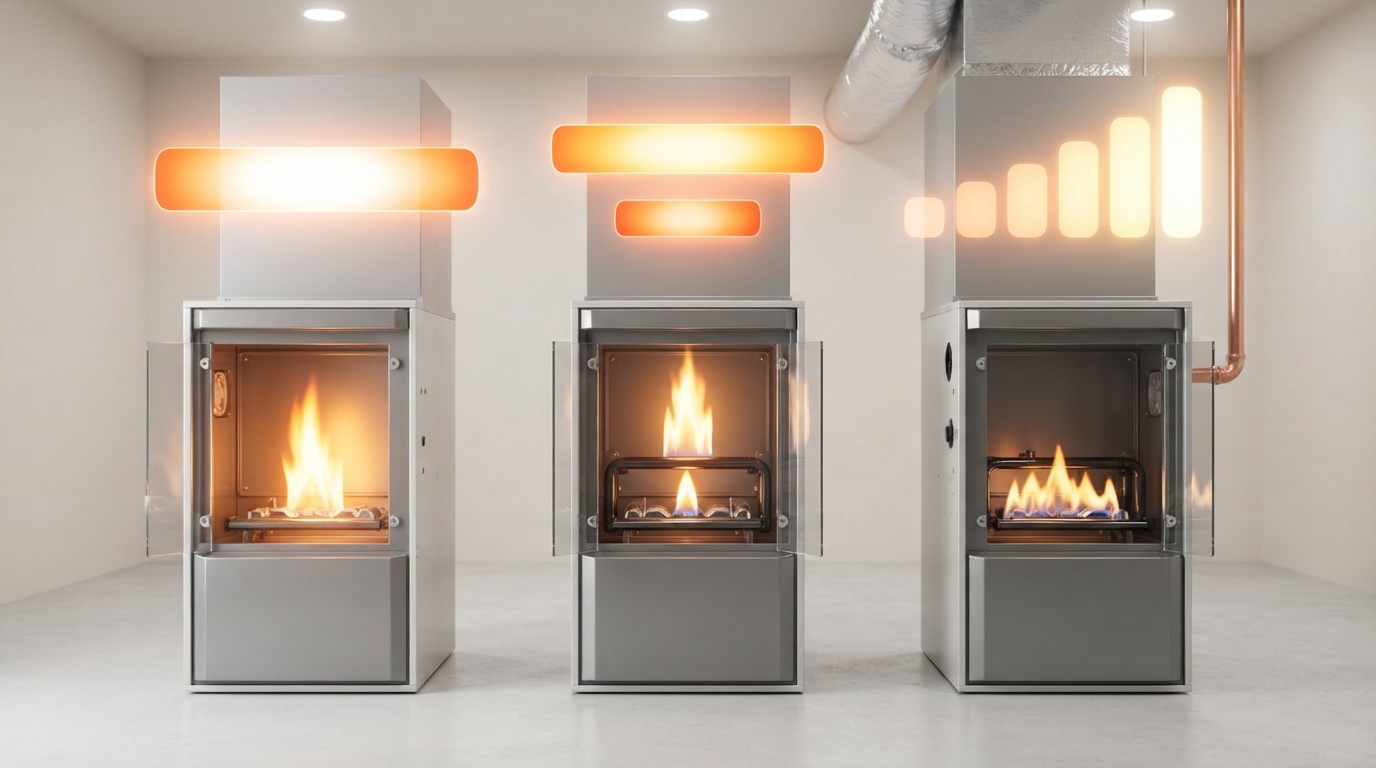
Have you ever tried to make sense of your furnace's spec sheet without feeling overwhelmed? With all the technical jargon, choosing the right furnace can be a headache. But understanding the difference between single-stage, two-stage, and modulating furnaces is crucial for ensuring your home stays comfortable and energy-efficient.
Why This Matters Now
As homeowners increasingly focus on energy efficiency and reducing utility bills, knowing which furnace type fits your needs can save you significant costs in the long run. With the rising concern about climate change and the push for greener energy solutions, understanding your heating options has never been more relevant.
Home heating is not just about comfort; it also encompasses a significant portion of your energy consumption. The type of furnace you choose can affect both your comfort levels in the winter and your wallet. Let's dive into the expert opinions on single-stage, two-stage, and modulating furnaces.
Expert Perspectives
Perspective: Mike Holmes (HVAC Contractor)
Mike Holmes emphasizes the need for practicality and efficiency when selecting a furnace. "Single-stage furnaces are simple but often run at maximum capacity, which can lead to temperature swings in your home. If your house is reasonably sized and you have a tight budget, a single-stage furnace can do the job. However, it won't offer the same efficiency as more advanced models."
In contrast, he advocates for two-stage and modulating furnaces for better comfort levels. "Two-stage furnaces are excellent for those who want a balance between cost and performance. They can operate at a lower capacity during milder weather, which means using less energy. Modulating furnaces take it a step further, adjusting their output based on real-time needs, ensuring your home remains at a consistent temperature without wasting energy."
Perspective: Rachel Adams (Energy Analyst)
Rachel Adams brings an energy efficiency perspective to the debate. "From an energy savings standpoint, the difference is notable. Single-stage furnaces can be quite inefficient, often operating at full throttle even when it's not necessary. Two-stage models can lead to a 10-25% reduction in energy costs compared to single-stage models."
Adams points out that investing in a modulating furnace can lead to even greater savings. "These systems are capable of fine-tuning their operation and can provide energy savings of 30% or more compared to single-stage furnaces. While they are more expensive upfront, the long-term savings can be substantial."
Perspective: Greg McMillan (Building Scientist)
Greg McMillan adds a scientific perspective to the discussion. "It's important to recognize how these heating systems interact with a home's overall design. In a well-insulated home, a two-stage or modulating furnace offers significant advantages over a single-stage model."
He goes on to explain, "Modulating furnaces are particularly efficient in homes with good insulation and smart temperature controls. They provide a steady flow of heat which can prevent drafts and keep your indoor climate stable. This promotes overall health and comfort within your home."
Editorial Synthesis
Where Experts Agree
- Efficiency matters: All experts note that energy efficiency is crucial and can lead to substantial savings over time.
- Comfort and stability: A modulating furnace provides the best comfort levels, followed closely by two-stage systems.
- Upfront vs. long-term costs: While modulating furnaces are pricier initially, experts agree that they often pay off in the long run.
Where Experts Disagree
- Affordability: Mike believes single-stage models can work for budget-conscious homeowners, while Rachel argues against them due to inefficiency.
- Best fit for homes: Greg suggests that certain homes might benefit more from specific furnace types based on their insulation quality and layout, which differs from Mike's more straightforward advocacy for modulating systems for everyone.
Why This Matters
In conclusion, the type of furnace you choose can greatly impact both your comfort and energy bills. A single-stage furnace might fit a budget, but it lacks the efficiency and comfort of two-stage and modulating models. If you want to minimize your energy expenses while maximizing home comfort, investing in a two-stage or modulating furnace may be wise. As more homeowners take the leap towards sustainable living, understanding these furnace types and their implications becomes not merely a matter of choice but a crucial part of home management and climate responsibility.
Choose wisely, and you'll not only enjoy a warmer home but also contribute positively to the environment. Now is the time to make an informed decision for your home's heating needs, helping you stay warm and cozy during the cold months ahead.
The Voices
 Contractor, TV Host, Building Inspector
Mike Holmes
Support Single-Stage
Contractor, TV Host, Building Inspector
Mike Holmes
Support Single-Stage
Single-stage furnaces are straightforward and reliable, making them an excellent choice for homeowners who prefer simplicity in operation without sacrificing comfort.
Modulating furnaces offer outstanding efficiency, adjusting their output to match heating needs precisely, which can lead to significant energy savings and enhanced comfort over time.
 Building Scientist
Greg McMillan
Balanced Perspective
Building Scientist
Greg McMillan
Balanced Perspective
While both single-stage and modulating furnaces have their unique advantages, it's essential to assess individual home needs and energy costs to best determine which system is a better fit.
Understanding Your Heating Options: A Path to Comfort and Efficiency
Opting for a modulating furnace is the best choice for maximum comfort and efficiency.
References
- How to Choose the Right Furnace Energy Saver (energy.gov)
- Furnaces ENERGY STAR (energystar.gov)
- Understanding Furnace Efficiency Ratings ASHRAE (ashrae.org)