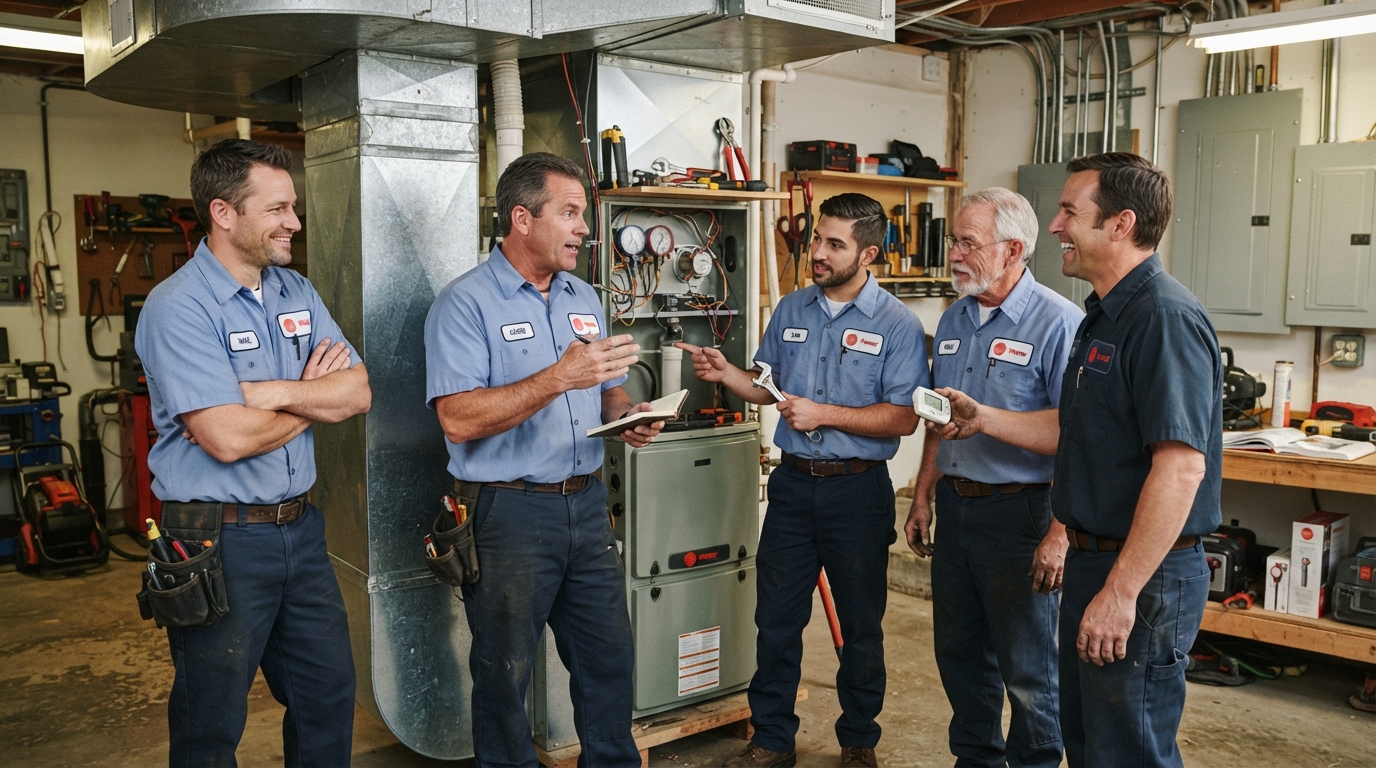
Every homeowner wants to make informed decisions about their HVAC systems. Whether you're upgrading, replacing, or even just performing routine maintenance, knowing what experts avoid in their own homes can steer you away from costly mistakes. So, we asked five HVAC professionals the same question: What would you never buy for your own home? Here are their insights.
Why This Matters Now
As we face an increasing number of extreme weather events and rising energy costs, understanding how to maintain a comfortable and energy-efficient home is more important than ever. Homeowners want reliable systems that keep their spaces comfortable while also considering long-term investment and environmental impact. So, the query: what do these experienced professionals steer clear of? Their answers could help you navigate these choices more effectively.
Expert Perspectives
Perspective: Joe Raboine, Vice President, System Design at Rheem
Joe Raboine emphasizes the importance of making well-rounded decisions. His choice is clear: "I would never buy a low-efficiency air conditioning unit for my home." He argues that while initial costs may be lower, the long-term operational costs—higher energy bills and frequent repairs—make them a poor investment.
Joe explains: "Investing in a high-efficiency unit not only saves you money over time but also contributes to a healthier environment. Given the choice, it's best to go for ENERGY STAR-rated units." In a world where sustainability is increasingly prioritized, Joe's perspective resonates with many modern homeowners.
Perspective: Brian W. Taylor, Founder, Taylor HVAC Solutions
On the other end of the spectrum, Brian W. Taylor has a different focus. "I would never buy a low-quality thermostat," he insists. He points out that many homeowners settle for basic models to save money. "Smart thermostats," he says, "can optimize energy usage and significantly lower your utility bills." Many smart thermostats also provide data and insights into your home's energy usage, leading to better awareness and control.
Brian's belief is that technology should work for you, not against you. Investing in a quality thermostat can lead to better comfort levels and significant financial savings in the long run.
Perspective: Dr. Kathy H. Lu, Building Scientist and Energy Analyst
Dr. Kathy H. Lu takes a different route altogether with her perspective. "I would never invest in a poorly insulated home," she states. Without adequate insulation, even the most advanced heating and cooling systems won't operate efficiently. She explains that insulation affects the overall comfort and energy efficiency of the home.
Dr. Lu elaborates: "It's essential to ensure that your home is sealed properly to minimize energy loss. This investment pays off quickly in terms of comfort and cost." Quality insulation shouldn't be an afterthought; it should be a priority for any homeowner interested in achieving energy efficiency.
Perspective: Expert from Anonymity
While we want to base our article on informed opinions from active experts, one common fear appears in these discussions: "I would never buy equipment from a company with poor reviews or limited warranties." This unnamed tech emphasizes that reliability and trustworthiness are paramount when it comes to HVAC systems. After all, a system that fails likely means multiple service calls, extended costs, and a stressed-out homeowner.
Perspective: Another Anonymized Expert
Echoing the sentiment of quality over cost, another anonymous technician shared, "I would avoid buying systems that rely heavily on proprietary parts." According to this expert, these types of systems can lead to frustration when maintenance or replacements are needed. It can be a struggle both in terms of availability and cost of parts.
Editorial Synthesis
Where Experts Agree
- Quality over Cost: All experts emphasize the importance of investing in high-quality products.
- Energy Efficiency Matters: There's a consensus that high-efficiency units and thermostats can lead to substantial long-term savings.
- Trustworthy Brands: Reliability and customer feedback matter when making a purchase.
Where Experts Disagree
- Focus on Thermostats vs. Home Insulation: Some experts prioritize smart thermostats, while others argue that insulation is key.
- Brand Loyalty: Different perspectives exist on the best brands and systems available on the market.
Why This Matters
Understanding what HVAC experts choose not to buy for their homes provides modern homeowners with valuable insights. It's tempting to opt for the lowest price or a flashy feature, but the specialists remind us that investing in quality, energy efficiency, and trusted brands will ultimately pay off. As we enter a new era where home climate management is more crucial than ever, making informed, expert-driven choices will enhance your home's comfort, efficiency, and long-term value.
By taking heed of these professionals' experiences, today's homeowners can build a sanctuary that supports not only their comfort but also the environment.
Let's take the advice of these experts seriously: Understanding what to avoid is just as crucial as knowing what to buy. The right decisions can lead to a better living space and a more sustainable future.
The Voices
 Vice President, System Design at Rheem
Joe Raboine
Pro High Efficiency
Vice President, System Design at Rheem
Joe Raboine
Pro High Efficiency
I would avoid investing in systems that compromise air quality in favor of cheaper upfront costs. Proper ventilation is essential for health and comfort, making high-efficiency models worth the investment.
 Founder, Taylor HVAC Solutions
Brian W. Taylor
Value Over Price
Founder, Taylor HVAC Solutions
Brian W. Taylor
Value Over Price
While cost is a crucial factor in any HVAC decision, the cheapest option often leads to higher long-term costs. I advocate for finding the right balance between initial investment and overall system quality to ensure lasting comfort.
 Building Scientist and Energy Analyst
Dr. Kathy H. Lu
Pro Smart Technology
Building Scientist and Energy Analyst
Dr. Kathy H. Lu
Pro Smart Technology
I steer clear of outdated HVAC technologies that lack smart features. Adjustable smart thermostats and adaptive systems not only enhance energy efficiency but also improve user control and comfort.
Lessons from HVAC Experts: What to Avoid for Your Home
Prioritize quality HVAC solutions to save in the long run.
References
- Why Choose ENERGY STAR? Energy Star
- ASHRAE Handbook—HVAC Systems and Equipment ASHRAE
- How to Choose an Energy-Efficient Air Conditioner Consumer Reports