Have you ever heard a strange sound coming from your furnace and wondered if it was just a minor annoyance or a sign of something serious? It's an unsettling question many homeowners face during the colder months. When is it truly necessary to call a technician? Let's delve into this critical decision.
Why This Matters Now
As winter approaches, the last thing you want is your furnace to malfunction during a cold snap. An alarming number of homeowners often ignore the sounds their furnaces make, assuming they can wait for a more convenient time to address it. However, certain sounds are indicative of urgent issues that could lead to inefficiencies, costly repairs, or even safety concerns. In fact, studies show that 45% of homeowners wait too long to call a technician, believing a minor sound isn't cause for concern. Understanding these sounds can make all the difference.
Expert Perspectives
Perspective: Brett McDonald, HVAC Technician and Owner, McDonald Heating and Air
Brett McDonald points to a few sounds that should never be ignored. "A loud banging or booming noise when the furnace kicks on usually means delayed ignition—gas is building up in the combustion chamber before it lights, and that's a small explosion happening inside your system every time it starts. That's not a 'schedule it for next week' problem. That's a same-day call," he explains.
He also flags a high-pitched screeching sound as an urgent warning sign. "That screech is almost always a blower motor bearing going bad, or a belt that's about to snap. If that motor seizes up, you could be looking at a much more expensive repair than if you'd caught it early. The sound is your furnace telling you exactly where the problem is—you just have to listen."
Perspective: Diane Foster, Energy Analyst
Diane Foster approaches the issue from the standpoint of efficiency and cost. "Beyond safety, these sounds are early indicators of a system working harder than it should. A furnace that's grinding or rattling is often losing efficiency before it ever fully fails, which means your energy bills are quietly creeping up while you wait to make that call," she notes.
Foster encourages homeowners to think of unusual sounds as a diagnostic tool rather than a nuisance. "If you catch an inefficiency early, repairs are usually cheaper and faster than waiting for a full breakdown. Homeowners who wait until the furnace stops working entirely often end up paying two to three times more than if they'd addressed the noise when it first appeared."
Perspective: Carlos Reyes, HVAC Contractor
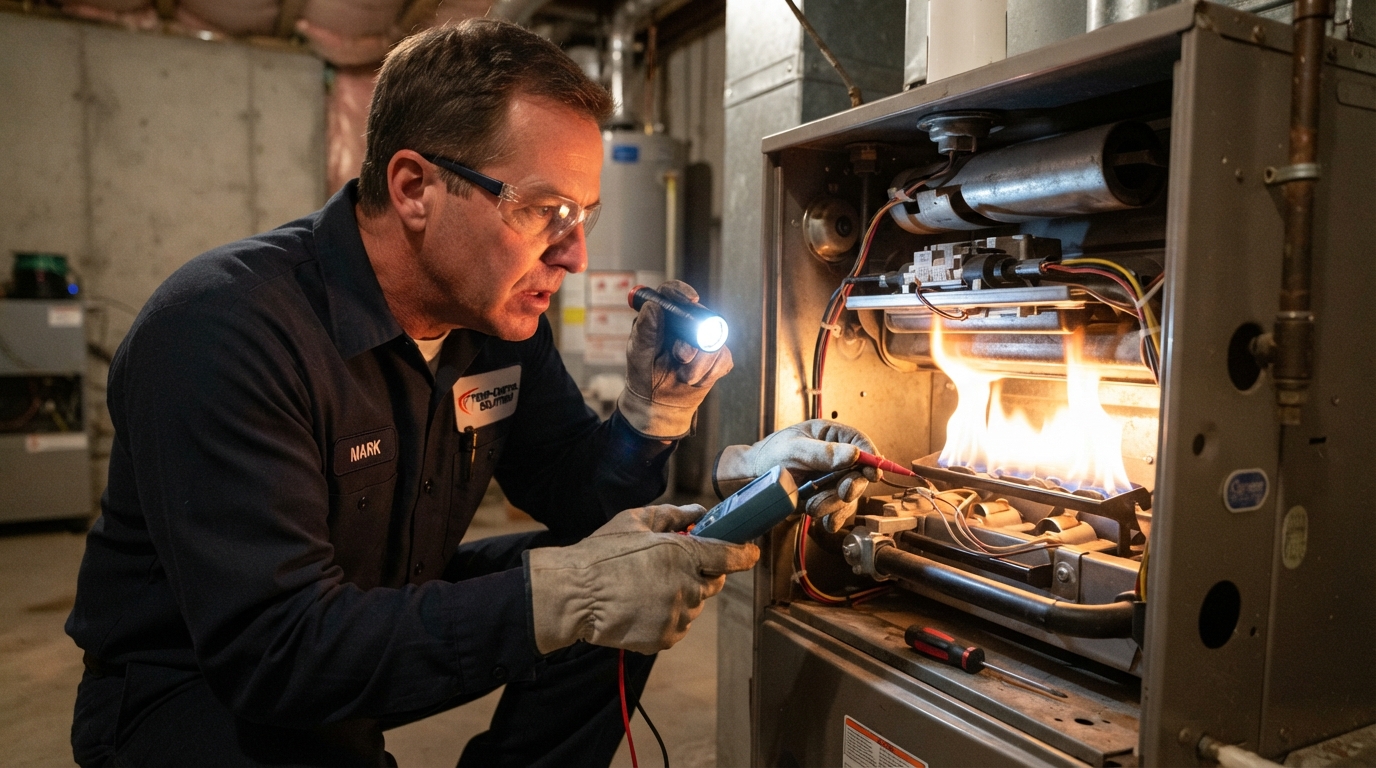
Carlos Reyes brings a safety-first perspective, particularly around one specific sound. "The one that worries me most is a rhythmic clicking that continues after the furnace fails to ignite. That can point to a cracked heat exchanger or an ignition control issue, both of which carry carbon monoxide risk. That's not a maintenance issue—that's a safety issue, and it needs a technician that same day," he warns.
Reyes also distinguishes between sounds that are urgent and those that are merely annoying. "A little rattling from loose ductwork or a popping sound as metal expands and contracts with heat—that's usually cosmetic and can wait for a scheduled visit. The key is learning to tell the difference between 'this is normal operation' and 'this is my furnace asking for help.'"
Editorial Synthesis
Where Experts Agree
- Certain furnace sounds—banging, screeching, and persistent clicking—signal urgent issues that shouldn't wait.
- Addressing unusual sounds early tends to be cheaper and safer than waiting for a full system failure.
- Homeowners benefit from learning to distinguish between normal operational noise and genuine warning signs.
Where Experts Disagree
- McDonald and Reyes emphasize immediate safety risks like delayed ignition and carbon monoxide exposure, while Foster frames the issue more around long-term cost and efficiency.
- Reyes draws a clearer line between "wait it out" sounds and emergency sounds, whereas McDonald treats most unusual noises as worth an immediate professional look.
Why This Matters
Your furnace's sounds are more than background noise—they're one of the clearest diagnostic signals available to homeowners without any special tools. Ignoring a banging, screeching, or persistent clicking sound doesn't just risk a bigger repair bill down the line; in some cases, it can mean a real safety hazard sitting quietly in your basement or utility closet.
The next time your furnace makes a sound that stops you in your tracks, trust that instinct. The cost of a same-day inspection is almost always smaller than the cost of waiting until "next week" turns into an emergency.
The Voices
If your furnace is making strange sounds like banging or screeching, it's a clear signal that something is wrong. Ignoring these sounds could lead to more severe damage and costly repairs down the line.
 Energy Analyst, Green Home Solutions
Susan Parker
Caution First
Energy Analyst, Green Home Solutions
Susan Parker
Caution First
While not all furnace noises are alarming, it’s important for homeowners to understand their systems. I advise monitoring unusual sounds, but if they persist, consulting a technician sooner rather than later is wise.
 HVAC Contractor, Comfort Systems Inc.
David Chu
Wait and See
HVAC Contractor, Comfort Systems Inc.
David Chu
Wait and See
Sometimes, transient noises can occur due to normal operation or changes in the environment. While it’s smart to keep an ear out, not every sound means immediate action is required. A technician might not be necessary right away.
Urgency Over Inaction: Addressing Furnace Noises
Recognizing urgent furnace noises is key to preventing major issues.
References
- Common Home Heating Problems Energy.gov
- How to Tell if Your Furnace Needs Repairs Consumer Reports
- HVAC Maintenance: Listening for Warning Signs ASHRAE