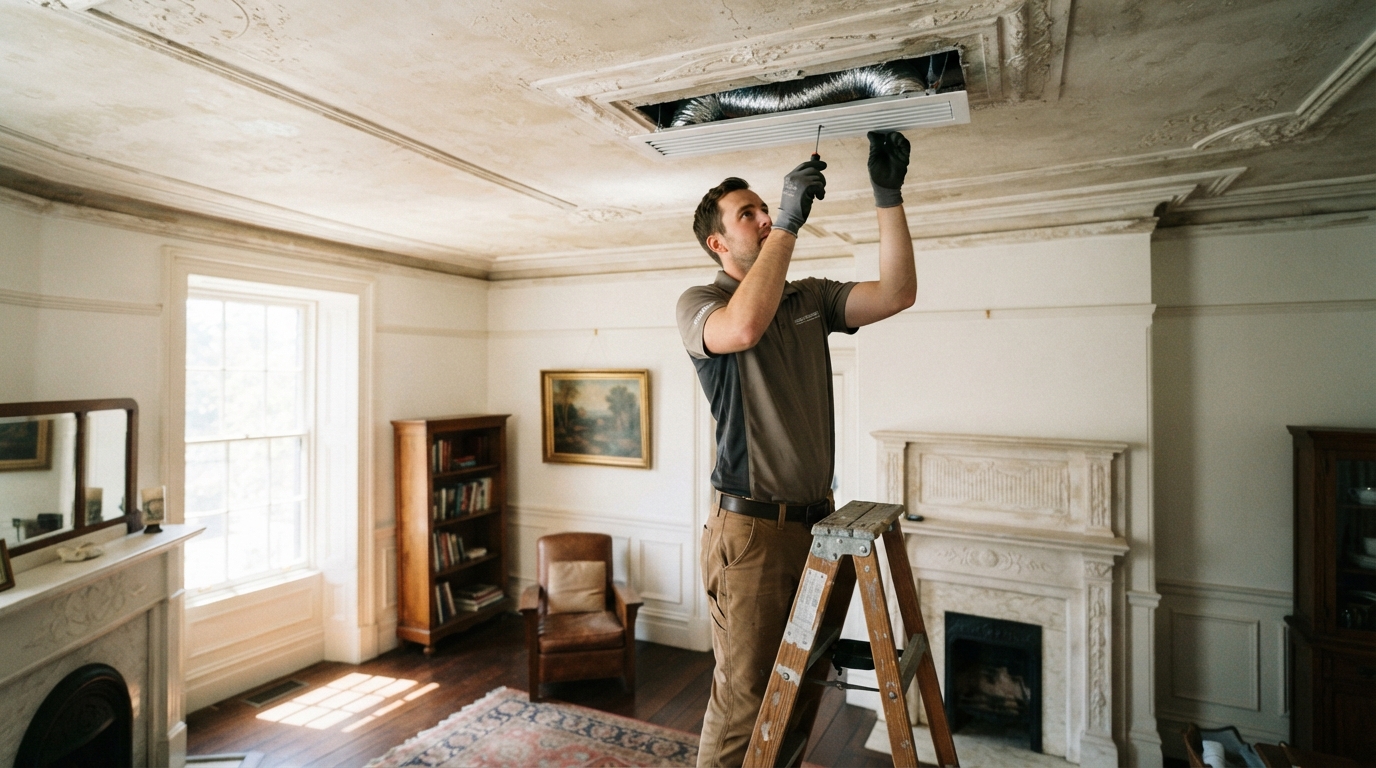
How can you enjoy modern comfort and efficiency in a historic home while preserving its timeless character? This question plagues many homeowners looking to retrofit central air conditioning systems into their cherished century-old houses.
Why This Matters Now
As temperatures rise and summer heat waves become more intense, many historic home owners are faced with a dilemma: updating an outdated cooling system or sweltering through the season. The charm of a vintage home often comes with practical limitations, such as insufficient insulation or inadequate airflow.
Homeowners must find a delicate balance. A recent study revealed that nearly 60% of homeowners prefer to keep the original aesthetics of their homes while retrofitting for modern standards. As energy efficiency becomes increasingly crucial, smart solutions are imperative.
Expert Perspectives
Perspective: Joe Lstiburek (Building Science Corporation)
Joe Lstiburek emphasizes the importance of understanding the building's shell before any modifications are made.
"Historic homes are unique in their construction and airflow patterns. When adding central air, it's crucial to assess how the original materials and design affect the new system. We want to make sure the climate control used is sensitive to the existing architecture, rather than overwhelming it."
Lstiburek suggests using a mini-split system or high-velocity ductwork that can be discreetly integrated. This method ensures that air distribution does not sacrifice the home's historical features.
Perspective: Gary Klein (Klein Consulting)
Gary Klein brings a focus on energy efficiency and climate impact. He advocates for solutions that are not only effective but also sustainable.
"Today's HVAC systems can be unrealistically powerful for older structures. A central air unit needs to be sized properly, not only to efficiently cool, but to minimize energy consumption. This often means older homes might benefit more from zoning and tailored cooling solutions that respect their age and design."
Klein believes in the value of rigorous energy audits, ensuring that the homeowner fully understands their home's requirements before selecting a system.
Perspective: Christine McIver (GreenAir Solutions)
Christine McIver, an HVAC contractor with a flair for integrating modern technology into historic frameworks, highlights practical installation methods.
"When I work on historic homes, the goal is always to keep the aesthetic intact. That means being creative with duct placement and even considering non-ducted solutions where necessary. I often recommend ductless systems that have the flexibility to blend in with old-world décor."
McIver often employs custom solutions that ensure that mechanical systems remain as unobtrusive as possible, exhibiting that modern technology can coexist with history.
Editorial Synthesis
Where Experts Agree
- Protecting the aesthetic integrity of historic homes is critical when retrofitting systems.
- Energy audits should be a standard part of the process to ensure efficient cooling solutions.
- Smaller, more flexible systems like mini-splits or ductless units often fit better in older homes.
Where Experts Disagree
- The need for central air vs. non-ducted solutions: While some experts advocate for central air, others suggest that ductless systems may be more appropriate for historic homes.
- Sizing the HVAC system: Some experts stress the importance of meticulous sizing to avoid energy wastage, while others believe that a more robust unit could still be effectively integrated without compromising integrity.
Why This Matters
As homeowners stand at the crossroads of preserving history versus embracing modern conveniences, the conversations around retrofitting central air systems are evolving. Each perspective offers crucial insights that can help make informed decisions tailored to individual needs, blending efficiency with architectural character.
Ultimately, the right approach to integrating modern comforts in historic homes can serve as a model for others facing similar challenges. As climate change intensifies and energy costs rise, the urgency to find workable solutions becomes clearer—and the commitment to preserve our historical treasures becomes more important.
Before diving into an HVAC upgrade, consult with experts and explore options thoroughly. Making informed choices can help you keep the charm of your 100-year-old home while ensuring a comfortable living environment for years to come.
The Voices
Adding central air to a 100-year-old house can be done without sacrificing its charm if approached thoughtfully. The key is to integrate modern HVAC systems with respect for historical elements and to prioritize energy efficiency.
 Energy Analyst, Klein Consulting
Gary Klein
Balanced Perspective
Energy Analyst, Klein Consulting
Gary Klein
Balanced Perspective
While retrofitting a historic home for central air can enhance comfort and efficiency, it's essential to balance modern needs with the home's historical integrity. The focus should be on solutions that are minimally invasive and respect the original architecture.
 HVAC Technician
Christine McIver
Modern Integration
HVAC Technician
Christine McIver
Modern Integration
It's possible to add central air to century-old houses while enhancing their charm. By using innovative ductless systems or discreet ductwork, homeowners can improve comfort and efficiency without compromising the architectural beauty.
Preserving Charm While Embracing Comfort
Careful retrofitting can enhance both comfort and character in historic homes.
References
- Improving Central Air Conditioning Efficiency Energy.gov
- Tips for Enhancing Home Comfort EnergyStar.gov
- The ASHRAE Guide for Historic Buildings ASHRAE