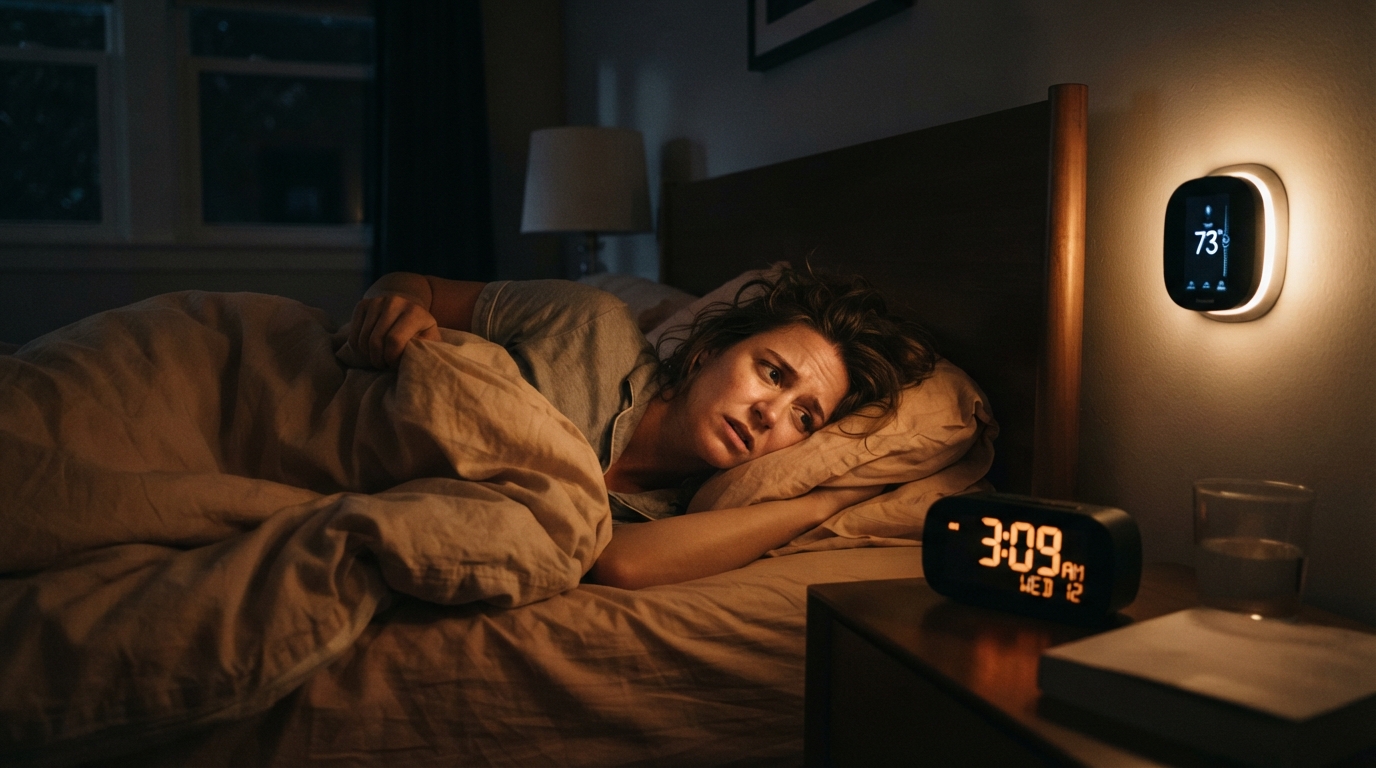
If you've found yourself tossing and turning in the dead of night, only to wake up at 3 AM, you might be quick to blame stress or a racing mind. But what if it's not just your thoughts keeping you awake? Many homeowners overlook a critical aspect of sleep hygiene: bedroom temperature.
Why This Matters Now
In a time where home comfort is paramount—especially with many of us spending more time indoors—the interplay between sleep and our indoor climate is vital. The impacts of a restful night are well-documented: improved mood, better productivity, and even enhanced physical health. Yet, many of us remain unaware that our thermostats can either be friends or foes in our quest for a good night's sleep.
Expert Perspectives
Perspective: Danielle Dyer (HVAC Technician)
Danielle Dyer emphasizes that temperature regulation is central to sleep quality. "The ideal sleep temperature is generally between 60-67°F (15-19°C)," she states. According to her extensive experience, many homeowners set their thermostats too high at night. "When your bedroom is warm, your body can't cool down, which interferes with your sleep cycle."
She also highlights the importance of insulation and airflow. "If your room is poorly insulated or doesn't have proper airflow, you might be waking up not just hot but experiencing fluctuations in temperature that disrupt restful sleep."
Perspective: Mike Holmes (Building Scientist)
Building scientist Mike Holmes agrees but takes a more holistic approach. "Temperature isn't the only concern; humidity plays a significant role," he says. He suggests using a humidity gauge alongside your thermostat. "An optimal indoor humidity level is between 30-50%. If your room is too humid, it can feel warmer than it actually is, pushing you closer to wakefulness."
Mike also points to building materials that can affect temperature retention. "Proper insulation, sealing gaps, and using energy-efficient windows can make a noticeable difference in maintaining that ideal sleep temperature overnight."
Perspective: Sarah Reid (Energy Analyst)
From an energy consumption standpoint, Sarah Reid sheds light on how homeowners can balance comfort with efficiency. "Many people crank up their energy usage without realizing that a programmable thermostat can be a game changer," she explains. "Set it to cool down the house just before bedtime and slightly warm it up before morning. This not only enhances sleep but can also save on energy bills."
Sarah emphasizes the importance of understanding how HVAC systems operate. "A well-maintained system that's the right size for your home can cool your space effectively without straining your energy resources."
Editorial Synthesis
Where Experts Agree
- Ideal Sleep Temperature: All experts concur that keeping your bedroom temperature in the range of 60-67°F leads to better sleep.
- Impact of Humidity: Humidity levels have a notable effect on comfort, with all three experts recognizing that too much or too little can disrupt sleep.
- Importance of Maintenance: Proper maintenance of HVAC systems is vital for maintaining optimal sleep environments.
Where Experts Disagree
- Focus on Temperature vs. Humidity: While Danielle stresses temperature regulation, Mike places more emphasis on humidity management, suggesting that both need equal attention.
- Thermostat Control: Sarah provides solutions around programmable thermostats, while Danielle suggests simple temperature control, leaving some argumentation about the best approach to control sleep environments.
Why This Matters
As we navigate through our busy lives, sleep is often the first thing to be compromised. By understanding the role that temperature and humidity play in our rest, homeowners can take actionable steps to create a sanctuary for sleep.
Whether it's re-evaluating your thermostat settings or investing in better insulation, small changes can lead to a restful night. After all, a well-rested individual is more productive, healthier, and happier. Your home should be a haven, not an obstacle, for a night of restorative sleep. As our experts have outlined, optimizing your indoor climate is not just a luxury—it's becoming a necessity for modern homeowners.
In conclusion, if you find yourself waking at 3 AM, take a moment to consider your bedroom climate. Adjustments to your thermostat might be the key, helping you slip back into slumber rather than stressing about unfinished tasks.
The Voices
 HVAC Technician
Danielle Dyer
Pro Temperature Regulation
HVAC Technician
Danielle Dyer
Pro Temperature Regulation
Proper bedroom temperature can significantly improve sleep quality. When temperatures are too high or too low, it disrupts the body's natural sleep cycles, leading to frequent wake-ups.
 Contractor, TV Host, Building Inspector
Mike Holmes
Neutral Perspective
Contractor, TV Host, Building Inspector
Mike Holmes
Neutral Perspective
While temperature is a crucial factor for sleep quality, it interacts with various elements like humidity and air flow, which shouldn't be overlooked. A holistic approach is necessary for optimal sleep environments.
 Energy Analyst
Sarah Reid
Pro Energy Awareness
Energy Analyst
Sarah Reid
Pro Energy Awareness
Improper thermostat settings can lead to energy inefficiency, impacting sleep indirectly. Addressing these can optimize both sleep quality and energy bills, creating a more comfortable environment.
Temperature Matters: The Key to a Restful Night's Sleep
Bedtime comfort hinges on temperature and humidity management.
References
- Optimal Temperature for Sleep Energy Star
- Thermal Environmental Conditions for Human Occupancy ASHRAE
- How Temperature Affects Sleep Quality Consumer Reports