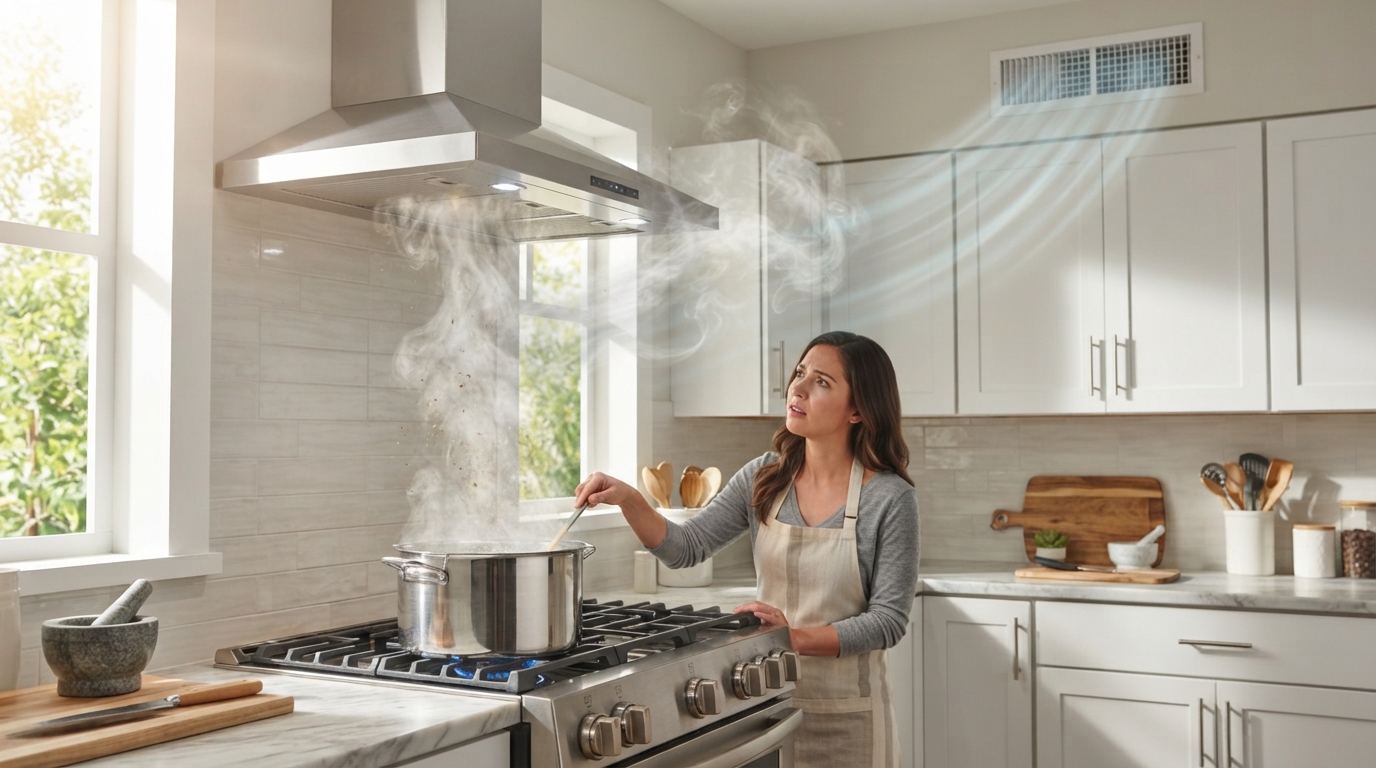
Have you ever noticed that after cooking a meal, you feel a mix of heat and humidity in your kitchen? Or maybe you've wondered why your HVAC system seems to be struggling more than usual? If you're nodding your head, you're not alone. This common kitchen dilemma revolves around the often-overlooked interactions between your range hood and your HVAC system.
Why This Matters Now
With the rise in energy costs and increased focus on home comfort, understanding how to harmonize your kitchen ventilation with your HVAC system is more pressing than ever. Proper ventilation is not just about removing smoke and odors; it's also about maintaining air quality and efficiency in your home. With more people cooking at home, the demand for a powerful yet efficient ventilation system is greater, making this topic essential for modern homeowners.
Expert Perspectives
Perspective: Christine McIver (HVAC Technician)
Christine McIver emphasizes the important role a range hood plays in home ventilation.
"A range hood is designed to extract odors, smoke, and humidity from the kitchen, which is crucial for maintaining a healthy indoor environment. However, if not properly matched to the HVAC system, it can lead to conflicts that reduce overall home comfort. If the range hood is too powerful, it might create negative pressure in the kitchen, causing the HVAC system to work harder to maintain temperature and air quality."
Christine suggests that finding the right balance involves understanding the capacity of your hood relative to your home's HVAC system. "When selecting a range hood, consider its CFM (cubic feet per minute) rating. It's crucial to consult an HVAC specialist to avoid making common mistakes that can lead to further complications."
Perspective: Michael D. McClain (Building Scientist)
Michael D. McClain offers a scholarly viewpoint, delving into the science behind air pressure in homes.
"The dynamics of indoor air quality encompass the balance of various systems at play. A range hood that works too aggressively can cause negative pressure, pulling in unconditioned air from other areas of the house, effectively making your HVAC system work against itself. This is problematic in winter when cold air gets drawn in, increasing heating costs."
He advocates for a holistic approach: "Consider your entire building as a system. Optimize not just the range hood but the entire ventilation strategy in your home. This can lead to improved energy efficiency and air quality, ultimately saving you money."
Perspective: Tasha Green (Energy Analyst)
Tasha Green lends her expertise from an energy efficiency standpoint.
"Many homeowners overlook how much energy their range hood consumes, especially when used solely for cooking. A poorly designed ventilation system can lead to higher energy bills. I recommend looking into ENERGY STAR-rated appliances and consulting with an energy analyst before making upgrades. It's also imperative to consider the layout of your home to ensure airflow isn't disrupted."
Tasha stresses, "Investing in your kitchen's ventilation can save costs in the long run, particularly when paired with an efficient HVAC setup. Efficient homes are more than just energy-saving; they're healthier."
Editorial Synthesis
Where Experts Agree
- A range hood is essential for removing smoke, odors, and humidity from the kitchen.
- Proper ventilation is crucial for maintaining indoor air quality and overall home comfort.
- The relationship between the range hood and HVAC system needs careful consideration and planning.
Where Experts Disagree
- The extent to which a range hood can negatively impact HVAC efficiency. Christine views it as a significant factor, while Michael suggests it is one of many aspects of home ventilation.
- Strategies for optimizing HVAC systems can vary, with Tasha favoring energy-efficient solutions while also advocating for system redesign if necessary.
Why This Matters
As home cooking becomes a cherished activity, recognizing the interplay between your range hood and HVAC system is vital for both comfort and energy efficiency. A well-ventilated kitchen not only facilitates enjoyable cooking experiences but also contributes to the overall health and comfort of your home.
In conclusion, seek professional assistance when selecting or modifying your kitchen ventilation systems. A balanced approach to your range hood and HVAC will not only make your home a comfortable sanctuary but will also save you money in the long run. Understanding how to create synergy between these systems may seem daunting, but with expert guidance, you can ensure a well-ventilated, energy-efficient home for years to come.
The Voices
 HVAC Technician
Christine McIver
Pro Active Ventilation
HVAC Technician
Christine McIver
Pro Active Ventilation
Properly designed kitchen ventilation systems, including range hoods, are crucial for maintaining indoor air quality and should work hand-in-hand with HVAC systems, not against them.
 Building Scientist
Michael D. McClain
Balanced Approach
Building Scientist
Michael D. McClain
Balanced Approach
While kitchen ventilation is important, it's essential to consider the overall design of the home to ensure that both the range hood and HVAC systems contribute effectively to energy efficiency.
Finding Harmony in Home Ventilation
Balancing your range hood and HVAC system is key to a comfortable home environment.
References
- Home Ventilation Energy.gov
- Ventilation Systems Energy Star
- Ventilation for Acceptable Indoor Air Quality ASHRAE